



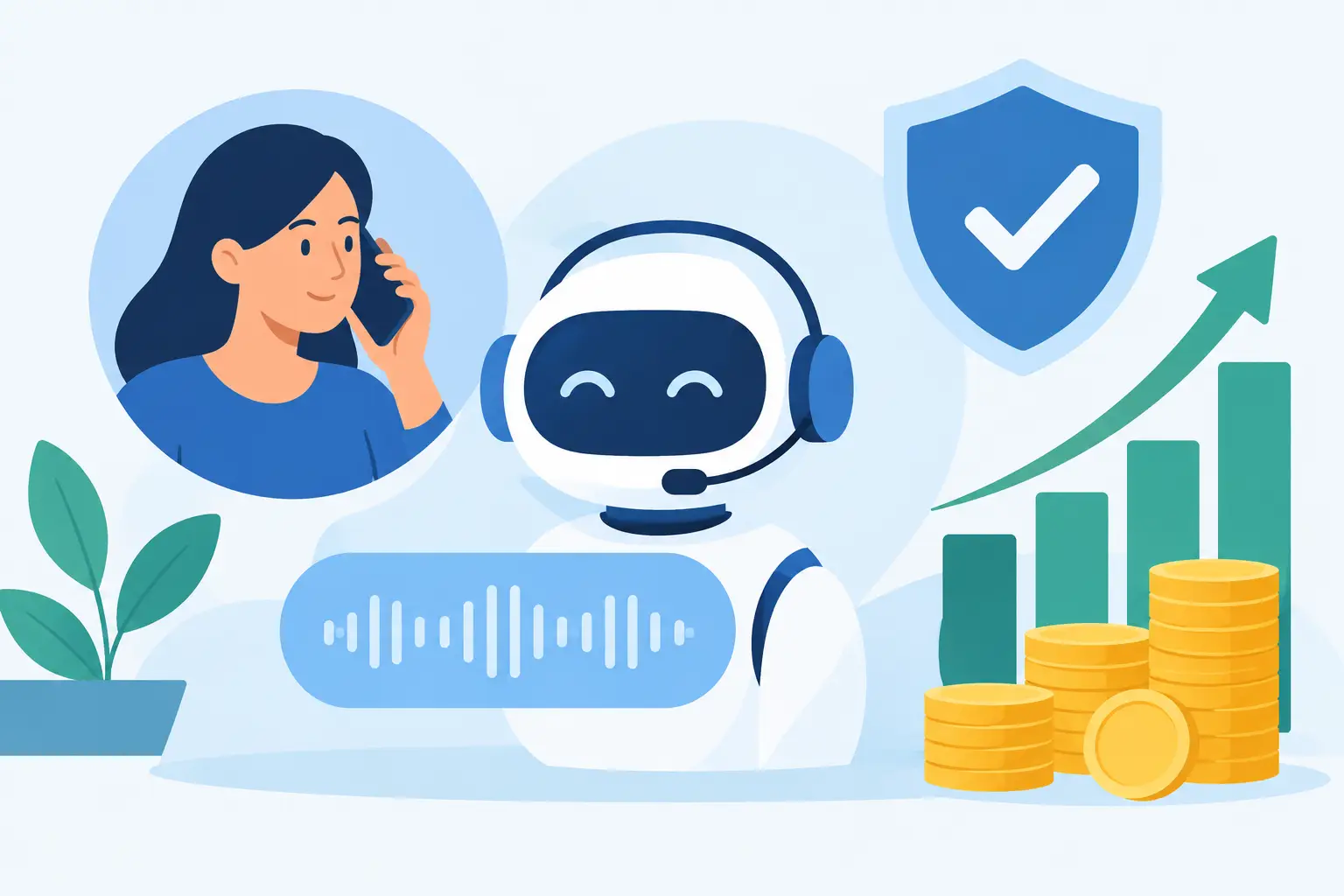
A missed payment does not always require a collector to spend 20 minutes dialing, leaving a voicemail, documenting the outcome, and setting the next follow-up. Debt collection voicebots can handle the repeatable first layer of that work: confirming the right contact, sharing approved information, taking a payment commitment, and routing exceptions to a trained person.
The opportunity is not to make collections more aggressive. It is to make the process more consistent, timely, and easier to govern. For lenders, service providers, healthcare billing teams, legal offices, and collection operations, the right voice workflow reduces manual call volume without removing judgment where it matters.
Where debt collection voicebots create operational value
Collections performance often breaks down in the gaps between attempts. An account is assigned late. A promised payment is not followed up on. A voicemail is never logged correctly. A customer who needs an accommodation reaches a general queue instead of the right specialist.
A voicebot gives teams an always-on calling layer for narrow, controlled workflows. It can place reminder calls at approved times, handle inbound payment-status questions, send confirmed outcomes to a CRM, and schedule the next action automatically. With 50 or more parallel calls, teams can work through high-volume reminder campaigns without hiring a larger dialing team for every surge.
The strongest use cases are usually straightforward. A utility provider may call customers before a service interruption date. A medical practice may follow up on outstanding balances after insurance processing. A dealership may contact customers about a past-due service plan payment. In each case, the bot follows an approved script and captures structured outcomes rather than improvising.
That structure matters. Calls can be recorded and transcribed, dispositions can be standardized, and managers can see answer rates, transfer rates, payment-intent outcomes, and unresolved issues in one reporting view. Instead of asking whether calls happened, operations leaders can see what happened next.
Automation should handle routine calls, not sensitive judgment
Not every collection conversation belongs with an AI agent. Disputes, hardship requests, identity concerns, legal complaints, bankruptcy notices, threats of escalation, and emotionally charged situations need clear human escalation paths. The same is true when a consumer asks a question outside the agent’s approved knowledge base.
This is why a controlled voicebot design matters more than a human-sounding demo. The agent should have a defined job, approved language, a limited set of actions, and an immediate transfer route. It should not guess at account details, invent payment options, negotiate beyond authorized rules, or continue pressing when a caller asks to stop.
For many teams, the practical model is a three-part operation. The voicebot handles reminders and basic account routing. A human collector takes complex conversations and payment negotiations. The system records every attempt and pushes the result into the operating system the team already uses.
That approach protects staff time while preserving the human judgment needed for sensitive accounts. It also helps managers coach from real call data rather than incomplete notes.
Build compliance into the call flow before launching
Debt collection calling is regulated, and the rules can vary by account type, communication channel, state, and whether the organization is collecting its own debt or acting for another party. A voicebot is not a compliance shortcut. It is a system that must enforce the policies your legal and compliance teams approve.
Before deployment, define exactly what the agent may say, verify, collect, and transfer. Build rules for contact windows, call-frequency limits, consent status, do-not-call requests, wrong-party contacts, language preferences, voicemail handling, and identity verification. If a caller is not verified, the agent should not expose account-specific information.
Teams also need to evaluate applicable federal and state requirements, including the FDCPA where relevant, TCPA considerations, state debt collection laws, consent requirements, recording disclosures, and rules affecting automated or prerecorded calls. Requirements change and facts differ by workflow, so use qualified legal counsel to review the program before calls go live.
A compliant flow should make the safe action the default action. If the system cannot confirm a permitted next step, it should stop, log the event, and route the account for review.
What a practical voicebot workflow looks like
A good workflow begins with clean account data. The agent needs the correct phone number, account status, approved contact rules, language preference, and a defined next action. Feeding incomplete or stale records into an automated campaign creates risk at scale.
From there, the call should be simple. The agent introduces itself using approved language, completes the required verification, and identifies the purpose of the call only when permitted. It can offer approved options such as making a payment, receiving a payment link, setting a callback, or speaking with a representative.
When the customer makes a commitment, the workflow should write that disposition back to the CRM or collections platform immediately. If the commitment is missed, a follow-up sequence can be triggered based on your policy. If the caller requests a person, the call transfers with the relevant context so the customer does not have to repeat the entire conversation.
Cloud One-Ai can support this model by connecting voice agents to CRMs, calendars, payment-related workflows, and operational systems through 300+ integrations. The goal is not another disconnected tool. It is a call outcome that moves the account to the right next step.
Measure recovery quality, not just call volume
A high call count is not proof of a healthy collections operation. An automated program can produce thousands of attempts and still underperform if the scripts are unclear, contact timing is poor, or transfers are mishandled.
Track the full path from attempt to outcome. Useful measures include right-party contact rate, promise-to-pay rate, kept-promise rate, payment completion rate, human-transfer rate, opt-out rate, complaint rate, and average time from missed payment to first successful contact. Segment results by account age, customer language, campaign type, and call time.
Recordings and transcripts are especially useful for quality control. Review where callers abandon the conversation, which questions force escalation, and whether the agent consistently uses required disclosures. This is how teams improve the script without drifting from approved language.
There is also a customer-experience measure that deserves attention: resolution without friction. If a customer can quickly confirm a payment date, receive the correct next step, or reach a helpful person without waiting on hold, the operation is doing more than reducing cost. It is protecting the relationship.
Common mistakes to avoid
The first mistake is treating a voicebot like a generic sales agent. Collections calls need tighter controls, narrower language, and more careful escalation rules. A friendly voice is useful, but policy discipline is more important than personality.
The second is launching with too much scope. Start with a single low-risk workflow, such as inbound balance-routing or pre-delinquency reminders for verified, consented contacts. Review real outcomes, fix edge cases, then expand to additional account segments.
The third is failing to maintain the knowledge base and integrations. Payment rules, office hours, transfer destinations, dispute procedures, and approved scripts change. If the bot is not updated, its consistency becomes a liability instead of an advantage.
Finally, do not hide the human option. Automation works best when customers can reach the right person quickly. A clean transfer is often the difference between a resolved account and an avoidable complaint.
The best debt collection voicebots make routine follow-up faster, more measurable, and easier to control. Start with one approved workflow, keep a human close to every exception, and let every call produce an accountable next action.