



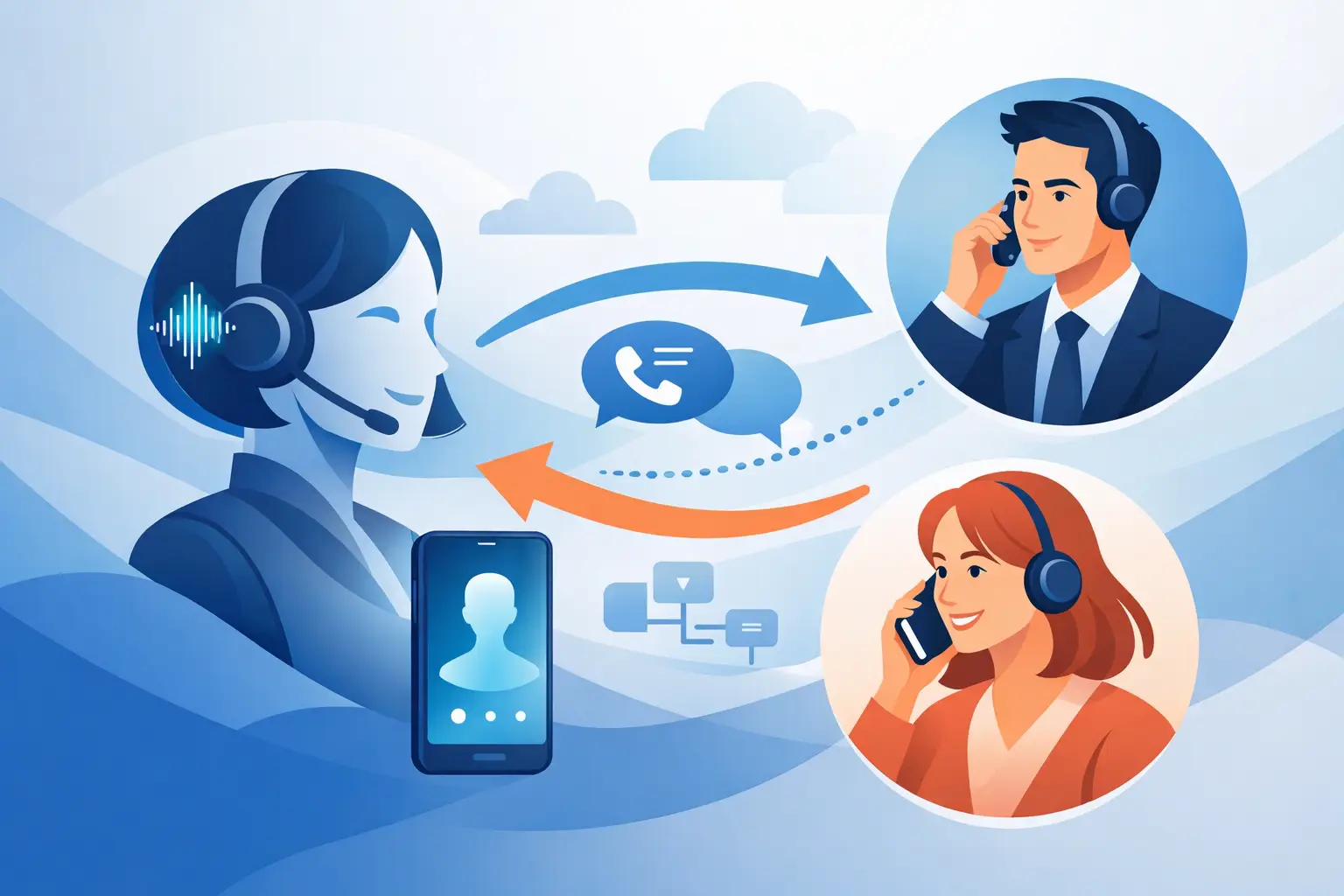
A missed transfer is more expensive than it looks. One caller gets bounced to the wrong person, another gives up on hold, and a high-intent lead never makes it to the calendar. That is why an ai phone agent for call transfers matters – not as a novelty, but as a practical way to route calls faster, keep context intact, and protect revenue when your team is busy.
For service businesses, clinics, sales teams, and multi-location operators, call transfers are where phone systems often break down. Front-desk staff get overloaded. After-hours calls stack up. Basic IVRs force people into dead ends. And when a transfer finally happens, the person picking up has no idea why the caller is there. The result is longer handle times, lower conversion rates, and a customer experience that feels disjointed.
An AI phone agent changes that by acting like a live traffic controller instead of a menu tree. It answers instantly, understands intent, collects the right details, and routes the caller to the right person, team, or location. If no one is available, it can book an appointment, capture a lead, trigger a callback, or continue resolving the issue on its own.
What an AI phone agent for call transfers actually does
At its best, this is not just automated forwarding. An AI phone agent listens to what the caller needs, qualifies the reason for the call, checks routing logic, and decides what should happen next. That may mean sending a patient to scheduling, transferring a sales lead to the right rep, routing a Spanish-speaking customer to a multilingual agent, or escalating a billing issue to a human with account notes already attached.
The difference is context. Traditional transfers move a call. AI-assisted transfers move the call and the information that makes the next conversation productive. That includes the caller’s reason, urgency, language preference, location, account status, and any key answers gathered before handoff.
In practice, that means fewer restarts. Your team spends less time asking, “Can you explain that again?” and more time solving the problem or closing the deal.
Why standard call routing breaks under real volume
Most businesses do not struggle with transfers because they lack phone lines. They struggle because routing logic gets messy when real call volume hits. Lunch rush. Monday morning. After-hours overflow. Seasonal spikes. Multiple locations. Different departments with different schedules. It only takes a few gaps for calls to pile up.
Static IVRs are weak in these moments because they depend on the caller choosing the right button and the business predicting every possible path in advance. Human receptionists are better, but they have limits. They can handle one conversation at a time, and under pressure, they triage instead of qualify.
An AI phone agent can handle many calls at once, ask follow-up questions, and apply routing rules consistently. That matters for businesses where every missed or mishandled call has a clear cost. Dental practices miss bookings. Legal offices lose consultations. Dealerships lose test drives. Restaurants miss large-party reservations. Sales teams lose inbound momentum.
The business case for AI phone agent call transfers
If your phone channel drives appointments, intake, or revenue, better transfers have a direct operating impact.
First, speed improves. Calls get answered immediately instead of waiting for a receptionist to free up. Second, transfer quality improves because the AI collects intent before routing. Third, labor pressure drops because staff are not stuck fielding repetitive calls that should have been handled automatically.
There is also a reporting advantage. With AI-managed transfers, you can see why transfers happen, where calls are going, how often handoffs fail, and which teams are overloaded. That gives operators something they rarely get from a basic phone tree – usable data.
For teams trying to do more without adding headcount, that is where the ROI shows up. Fewer missed calls. Better lead capture. Shorter handle times. Higher appointment rates. More consistent coverage after hours and across locations.
Where an AI phone agent for call transfers works best
The strongest use cases are the ones with repeatable call patterns and clear routing rules. Healthcare and dental offices are obvious examples. Patients call to book, reschedule, ask insurance questions, or reach a provider. An AI phone agent can sort those paths quickly and only hand off when staff input is actually needed.
Home services and field teams also benefit. Callers want quotes, emergency scheduling, dispatch updates, or billing help. AI can route based on urgency, geography, or service type instead of pushing everything to one overloaded coordinator.
Sales organizations use transfer automation differently. The goal is often speed-to-lead. The AI answers, qualifies the inquiry, and transfers hot prospects to an available rep in seconds. If nobody picks up, it can schedule a follow-up or trigger an outbound sequence. That keeps intent warm instead of letting inbound demand cool off in voicemail.
Multi-location businesses get another advantage. The AI can route based on zip code, store hours, department coverage, or language needs. That is far more useful than forcing callers to guess which location or extension they need.
What to look for in an AI phone agent for call transfers
Not every voice system is built for operational reliability. If call transfers are tied to revenue or service delivery, the details matter.
Start with natural language understanding. The system should recognize what callers actually say, not just exact menu phrases. Then look at transfer logic. You need rules based on time of day, location, department, availability, language, and call intent.
Human handoff is another big one. A transfer should include context, not just a ring. The receiving staff member should know who is calling and why. If the human does not answer, the AI should have fallback options such as voicemail capture, appointment booking, SMS follow-up, or routing to a backup queue.
Integration depth matters just as much. A transfer workflow is stronger when the AI can write notes into your CRM, check a calendar before offering times, log call outcomes, and trigger downstream automations. Without that, you improve the phone moment but still leave manual cleanup for your team.
Reporting should not be treated as optional. You want recordings, transcripts, disposition tracking, and visibility into transfer outcomes. That is how you spot friction and improve the flow over time.
The trade-offs to consider
AI transfers are not a fit for every call path. Highly sensitive, emotionally charged, or legally complex conversations may still need a human immediately. That does not weaken the case for AI. It just means your routing design should be intentional.
There is also a script design issue. If the AI asks too many questions before transferring, callers get impatient. If it asks too few, the handoff loses value. The right balance depends on your industry, call volume, and what the receiving team actually needs to do their job.
Accent coverage, language support, and compliance requirements can also shape the rollout. A business serving diverse communities or regulated workflows should make sure the platform can handle multilingual conversations, consent language, and reporting standards from day one.
This is where an operations-first setup matters more than flashy demos. Fast deployment is great, but stable routing, clear governance, and measurable performance are what make the system useful after week one.
How to deploy without creating new bottlenecks
The best rollout starts with one transfer-heavy workflow. Pick the call type that creates the most interruptions or lost opportunities. That might be new patient intake, appointment scheduling, inbound sales qualification, or after-hours support.
Map the real routing logic, not the idealized version. Who should get the call first? What details should be collected before transfer? What counts as urgent? What happens if nobody answers? Which outcomes should be logged automatically?
Then test with actual call scenarios. Not just a clean demo, but messy real-world inputs. People interrupt. They change topics. They ask for Spanish. They call the wrong department. A strong AI phone agent handles those turns without collapsing into a dead end.
Once the first flow is working, expand into adjacent use cases. That is usually where scale happens. One transfer flow becomes scheduling, then overflow support, then outbound follow-up, then multi-location routing. The system stops acting like a single-purpose bot and starts acting like phone infrastructure.
Platforms built for this model can move fast. Cloud One-Ai, for example, combines voice agents, global telephony, multilingual support, integrations, reporting, and human handoff in one system, which matters when you want to launch quickly without stitching together separate tools.
Better transfers are really about better outcomes
Most businesses do not need more calls. They need fewer broken moments inside the calls they already have. Transfer friction is one of the biggest of those moments because it affects speed, trust, and conversion all at once.
A strong AI phone agent for call transfers reduces that friction. It answers right away, routes with logic, carries context forward, and keeps your team focused on the conversations that need a human. That is not experimental. It is a cleaner operating model for businesses that still win or lose on the phone.
If your front desk is overloaded, your sales team misses live handoffs, or your locations struggle to route calls consistently, start there. Fix the transfer, and a lot of the rest gets easier.