



If your phone team is still judging performance by call volume alone, you are missing the part that actually changes results.
A missed appointment is not just a missed call. A bad transfer is not just a workflow issue. A lead that says “call me next week” and never gets a follow-up is not a sales problem in theory – it is a reporting problem. You need to hear what happened, see it in text, and spot patterns fast enough to fix them.
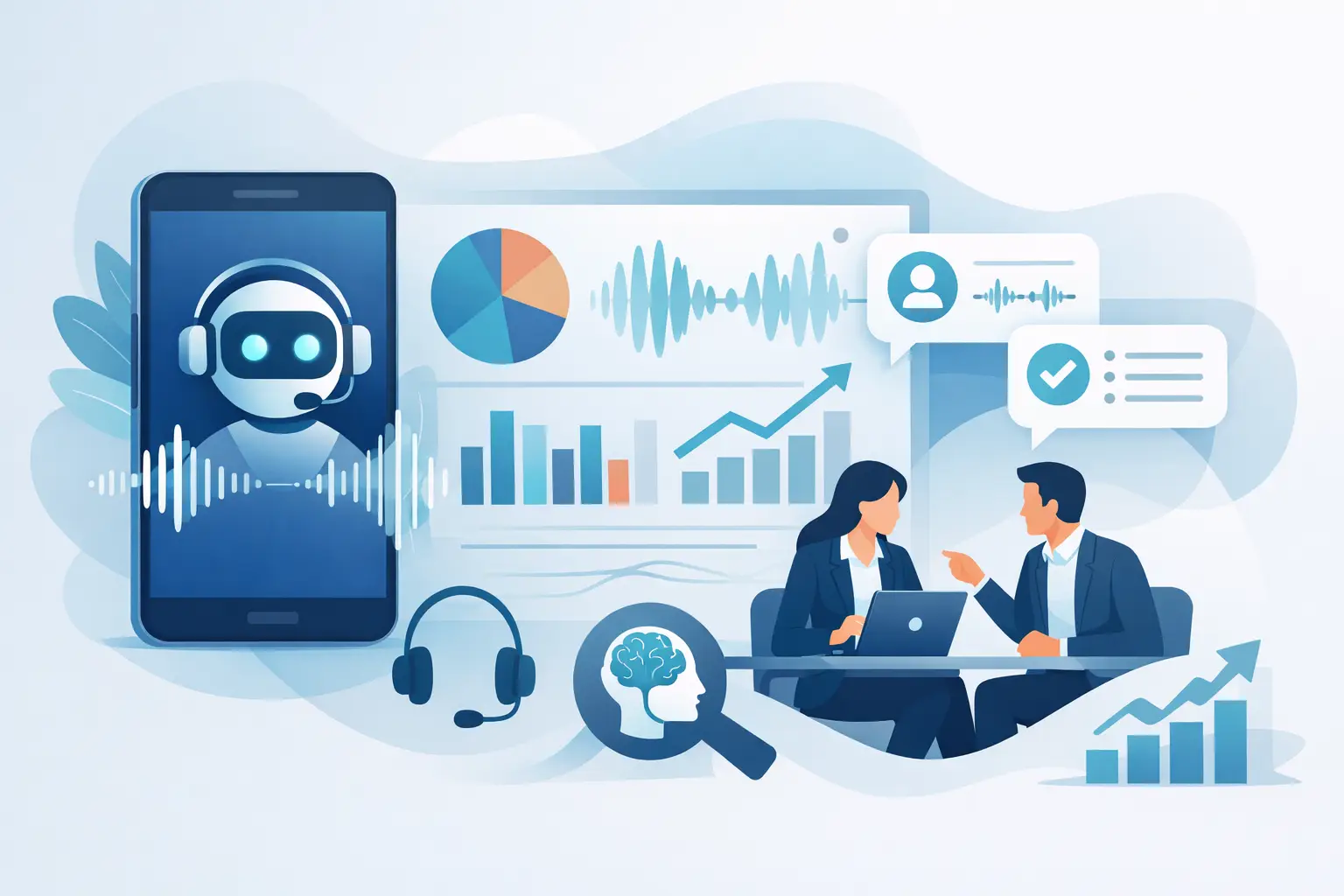
That is where ai call recordings and transcription reporting becomes useful. Not as a nice extra. As operating data.
What ai call recordings and transcription reporting should actually do
A lot of platforms stop at storing audio and generating a block of text. That is not reporting. That is an archive.
Real reporting should help an operator answer practical questions in minutes. Which locations are missing the most calls? Which appointment scripts are leading to the highest booking rate? Where are callers asking for a human? Which outbound campaigns are reaching the right contacts but failing to convert? Which agents, human or AI, are creating friction on the same step over and over?
When call recordings, transcriptions, and reporting are connected, each conversation becomes searchable, measurable, and coachable. You are no longer listening to random calls hoping to find a problem. You are reviewing trends, exceptions, and conversion points.
For a dental office, that might mean spotting that callers ask about insurance before booking, but the current script delays that answer and causes drop-off. For a dealership, it might mean hearing that trade-in callers want inventory confirmation before they commit to a visit. For a legal office, it could be identifying that intake calls stall when the caller is transferred too early.
The value is not the transcript itself. The value is what the transcript exposes.
Why call recordings alone are not enough
Recordings matter. They are your source of truth. They help with QA, dispute review, coaching, and compliance workflows. But recordings by themselves are slow to work with.
If a manager has to listen to 50 calls to find three moments that matter, reporting will lag behind operations. By the time the issue is identified, the campaign is over, the location manager has moved on, or another week of appointments has been lost.
Transcriptions change the speed of review. Reporting changes the speed of action.
With searchable transcripts, teams can look for words and phrases tied to outcomes. Think “insurance,” “price,” “not interested,” “call back,” “transfer me,” or “I need Spanish.” That makes it possible to see not only what happened on one call, but what is happening across hundreds or thousands of calls.
This is especially important for businesses handling inbound and outbound traffic at the same time. A front desk team might care about show rates, reschedules, and hold times. A sales team cares about lead qualification, objections, and close rates. An agency managing multiple client accounts needs clean reporting by subaccount, location, and campaign. Different teams need different views, but the same call data should support all of them.
Where reporting creates the biggest operational lift
The biggest gains usually show up in three areas: revenue capture, staffing efficiency, and script improvement.
On the revenue side, reporting helps surface where money leaks out of the phone channel. Missed calls after hours. Leads that were answered but never booked. Follow-ups that were promised but not scheduled. If your business depends on calls to fill chairs, calendars, or consultations, that leakage adds up quickly.
On the staffing side, recordings and transcripts help you separate call volume from call quality. Maybe your team is answering enough calls, but spending too long on low-value conversations. Maybe simple FAQs are tying up staff who should be focused on high-intent callers. Maybe your busiest locations need overflow support only during specific windows. Good reporting lets you adjust coverage with more confidence instead of hiring reactively.
Then there is script performance. This is where AI calling platforms can pull ahead of manual operations. If you can compare transcript patterns against outcomes, you can refine prompts, qualification logic, objection handling, and transfer rules based on evidence. Not opinions.
That matters whether the caller is booking a haircut, confirming a medical appointment, responding to an outbound financing offer, or calling to renew a service plan.
What to look for in AI call recordings and transcription reporting
Not every business needs the same level of analysis, but a few capabilities matter almost everywhere.
First, the reporting has to tie directly to outcomes. A transcript without call disposition, booking result, transfer status, or campaign source leaves too much guesswork. You want to know what was said and what happened next.
Second, it needs to work at scale. If your operation has multiple locations, multiple numbers, or outbound campaigns running in parallel, reporting should roll up cleanly and break down fast. Otherwise, managers spend more time exporting data than improving performance.
Third, it should support coaching and automation at the same time. A human team might use transcripts to improve training. An AI voice agent team might use them to refine the prompt, update the knowledge base, or tighten the handoff trigger. The best systems support both paths.
Fourth, integrations matter more than people think. Reporting becomes much more useful when calls sync into your CRM, calendar, or operational system. If a booked appointment, a no-show, and a transcript all live in separate tools, it is harder to prove ROI and harder to optimize the process.
That is why operations teams tend to prefer platforms that combine calling, reporting, and workflow automation in one place instead of stitching together separate telephony, transcription, and analytics tools.
The trade-offs most buyers miss
More data is not always better data.
Some teams over-collect recordings and transcripts, then never define what they are trying to improve. They end up with dashboards full of activity metrics and no clear operating decisions. Others focus so heavily on automation that they forget edge cases still need a human path.
Accuracy is another real consideration. Transcription quality can vary based on call audio, accents, industry terms, and background noise. That does not make transcription unreliable, but it does mean you should use it as part of a reporting system, not as a blind replacement for review. High-volume trend spotting is where it shines. Sensitive one-off decisions may still require a manager to listen to the original call.
There is also a compliance angle. Depending on your industry and geography, recording calls and storing transcripts may require specific consent, retention, and access controls. Healthcare, legal, and financial teams especially need to think through governance before they scale. The right platform should make reporting easier without creating risk.
How ops-minded teams use the data
The most effective teams do not treat reporting as a back-office function. They use it in weekly operating reviews.
A clinic might review how many inbound calls converted to booked visits, where callers dropped, and which questions forced a transfer. A restaurant group might compare after-hours call capture by location and use transcripts to refine reservation or catering workflows. A real estate team might look at outbound lead qualification transcripts to see which opening lines get engagement and which ones trigger immediate objections.
Agencies and resellers have another use case entirely. They need reporting that proves client value fast. If they are offering white-labeled voice AI to local businesses, they need dashboards that show answered calls, bookings, missed-call recovery, and conversation quality in a way clients understand immediately. Raw transcripts are useful. Clear performance reporting is what gets renewals.
This is one reason all-in-one voice platforms are gaining traction. When the same system handles inbound calls, outbound campaigns, recordings, transcriptions, charts, and handoff logic, teams can move from insight to change much faster. Cloud One-Ai is built around that model, which matters if you want deployment speed without assembling a stack of separate vendors.
A practical standard for better reporting
If you are evaluating tools, ask a simple question: after one week of calls, what decisions will this reporting help me make?
If the answer is vague, the reporting is probably too shallow. You should be able to identify which calls need human review, which scripts need adjustment, which campaigns are underperforming, and which locations are losing revenue due to coverage gaps.
That is the standard. Not whether the platform can produce a transcript. Most can. The real question is whether your team can use call data to improve bookings, shorten response times, recover missed opportunities, and reduce manual load without waiting on analysts or technical teams.
Phone calls still carry some of the highest intent in the business. The reporting around them should be just as serious.
The businesses that win here are not the ones with the most call data. They are the ones that turn every conversation into a faster next step.