



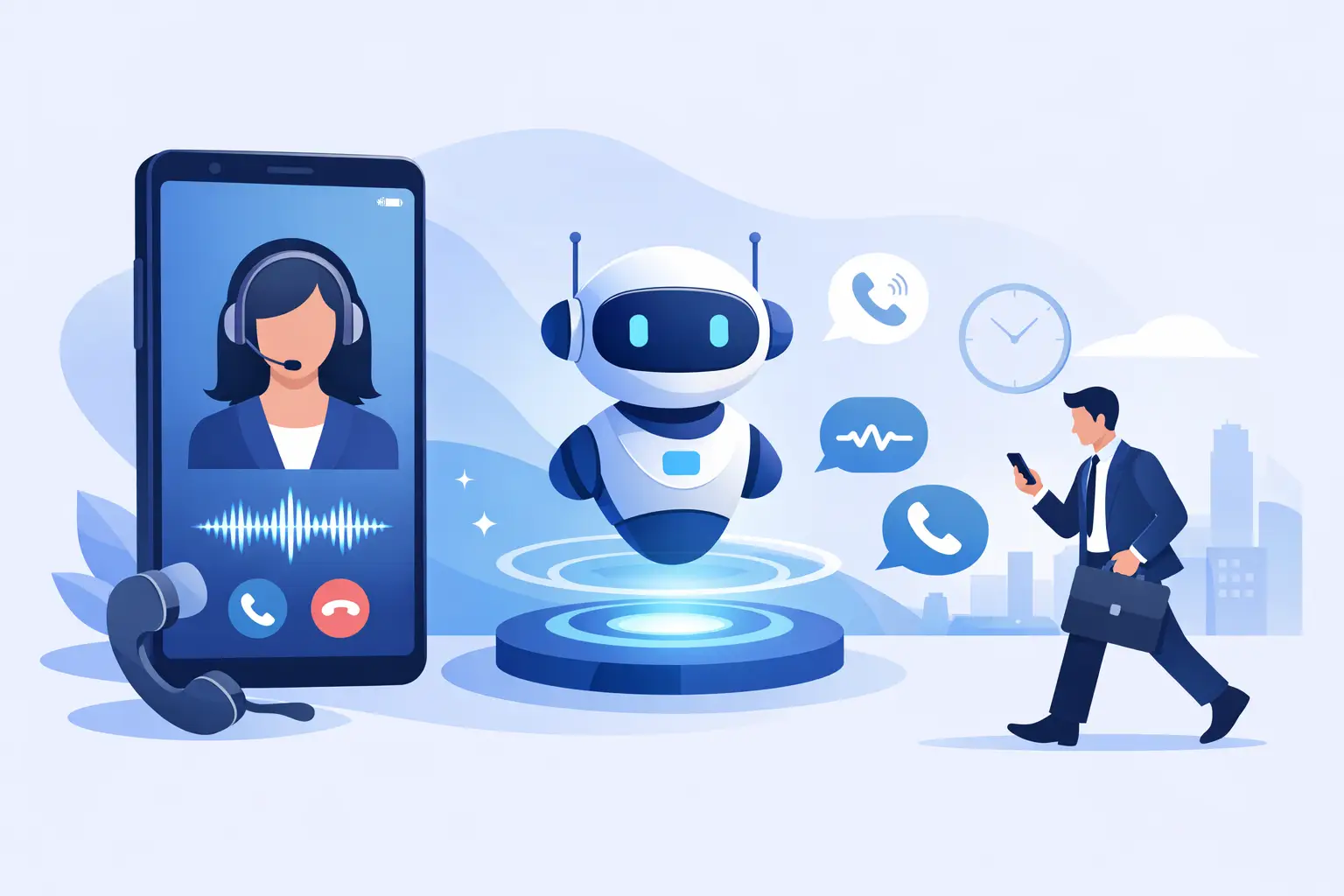
A missed call is rarely just a missed call. For a dental office, it may be a new patient who books elsewhere. For a dealership, it may be a buyer who goes cold before the next morning. For a busy legal practice, it may be someone who never gets a first response. Voice AI gives businesses a practical way to answer, qualify, schedule, and follow up when the phone rings – even when the team is already at capacity.
This is not about replacing every customer conversation with a machine. It is about removing the predictable gaps that cost revenue: long hold times, after-hours voicemails, abandoned calls, repetitive confirmations, and leads that wait too long for a callback. The right system handles the routine work instantly, follows defined rules, and transfers high-value or sensitive conversations to the right person.
What Voice AI Does for Call-Driven Teams
Voice AI uses conversational technology to make and receive phone calls in a natural, responsive way. Unlike a rigid phone tree that forces callers through menus, an AI voice agent can listen to intent, answer questions from an approved knowledge base, collect details, book an appointment, and update the systems your team already uses.
For a multi-location salon, that could mean checking availability, matching a caller with the right service, and placing the appointment directly on the calendar. For a real estate team, it can mean calling fresh leads within seconds, asking qualification questions, and routing serious buyers to an agent. For a medical or dental practice, it can manage scheduling, reminders, and common non-clinical questions while escalating anything that requires staff judgment.
The business value comes from speed and consistency. A caller gets an answer now, not when someone finishes with the person in front of them. Every lead receives the same initial follow-up process. Every call can be recorded, transcribed, categorized, and measured. That creates a calling operation that is always on without requiring a larger overnight or overflow staffing plan.
Where Voice AI Produces Measurable ROI
The strongest use cases are usually not complicated. They are high-volume conversations with repeatable steps and a clear next action. Appointment booking is a common starting point because the outcome is easy to track: calls answered, appointments booked, reschedules completed, and no-shows reduced through reminders.
Inbound support is another high-impact use case. An AI agent can answer hours, location, pricing, service, order, policy, and availability questions at any time. When a caller needs an exception, a complaint resolution, clinical guidance, or a complex quote, the agent can transfer the call with context rather than forcing the customer to start over.
Outbound calling changes the economics of lead response. Sales teams often have strong lead sources but inconsistent speed-to-contact. An AI agent can call new inquiries immediately, re-engage older leads, confirm appointments, collect basic information, and run follow-up sequences at scale. This is especially useful when a team needs to contact hundreds or thousands of records without asking reps to spend their best selling hours leaving voicemails.
Voice AI also supports retention. Service businesses can automate renewal reminders, missed-appointment follow-ups, review requests, payment reminders, and recall campaigns. Dealerships can contact customers about service intervals. Clinics can fill cancelled slots. Restaurants can answer reservation calls during peak service. These are small operational actions, but they add up when executed reliably.
The metric that matters depends on the workflow. A practice may focus on booked appointments and show rates. A call center may focus on contact rates, transfers, and cost per qualified lead. A legal office may measure first-response time and consultations scheduled. Start with a workflow where the existing baseline is clear, then compare performance after deployment.
Voice AI Works Best With Clear Operating Rules
A voice agent should not be asked to improvise your business. It performs best when it has defined goals, approved information, clear escalation paths, and direct access to the tools needed to complete the task.
That starts with the call flow. Decide what the agent should accomplish, what information it must collect, and when it should hand off to a human. A lead qualification flow might capture service interest, timeline, budget range, location, and consent for follow-up before offering a calendar slot. A support flow might identify the customer, resolve common questions, and transfer billing disputes or urgent cases to a live team.
Next, connect the systems that hold the operational data. A voice agent is far more useful when it can write call outcomes into a CRM, create appointments in Google or Apple Calendar, update a lead stage, send a confirmation, or trigger a task for the appropriate team member. Without integrations, staff still have to manually move information after each conversation, which limits the operational gain.
Knowledge control matters too. Give the agent access to current FAQs, service details, location information, policies, and approved scripts. Website crawling and PDF knowledge base ingestion can speed setup, but the material should be reviewed before calls go live. Outdated pricing, unclear policies, or conflicting documentation will create poor customer experiences no matter how natural the voice sounds.
The Trade-Offs to Plan For Before Launch
Voice AI is powerful, but it is not a reason to remove human judgment from every phone interaction. High-stakes conversations need strict routing rules. Healthcare practices should keep clinical advice with qualified staff. Legal offices should avoid allowing an agent to provide legal guidance. Financial, billing, cancellation, and complaint workflows often need a human escalation option based on the caller’s request or specific keywords.
Compliance is not an afterthought. Outbound teams need to follow applicable consent, recording disclosure, calling-time, and opt-out requirements. Businesses should establish who can access recordings and transcripts, how long they are retained, and what information should never be collected over the phone. If the agent handles sensitive customer data, governance needs to be built into the workflow from the start.
There is also a practical brand consideration. Some callers will prefer a person, particularly when they are frustrated or dealing with an unusual situation. A good voice AI deployment makes the human option easy to reach. It should reduce friction, not create another barrier between the customer and help.
How to Deploy Voice AI Without Creating More Work
Start with one call type that is frequent, measurable, and currently underserved. After-hours appointment booking, inbound lead capture, confirmation calls, or old-lead reactivation are solid first projects. Avoid beginning with the most complex process in the business. Early wins build confidence and provide real call data for improving the agent.
Before launch, listen to a sample of real calls. Identify the questions customers ask, the terms they use, where conversations stall, and the reasons agents transfer calls. Build the first version around what actually happens on the phone, not what a flowchart says should happen.
Run a controlled rollout, review recordings and transcripts, and adjust the prompt, knowledge base, and transfer logic quickly. Watch where callers repeat themselves, where the agent misunderstands intent, and where a new question appears often enough to deserve an approved answer. Call reporting should guide improvements, not sit unused in a dashboard.
For teams that need volume, parallel call handling matters. The ability to run dozens of calls at once can turn a campaign that would take days of staff time into a focused, trackable outreach effort. For businesses serving diverse communities, multilingual voice support can ensure callers receive help in the language they are most comfortable using.
Cloud One-Ai is built for this operational model: inbound and outbound agents, global phone numbers, multilingual conversations, reporting, human handoff, and integrations that move call outcomes directly into the systems teams use to run the business.
Voice AI Is a Calling System, Not a Gimmick
The most successful teams treat voice AI as part of their revenue and service infrastructure. They define the job, connect the workflow, protect the customer experience, and measure the result. They do not deploy it simply because AI is popular. They deploy it because every unanswered call, delayed follow-up, and repetitive task has a cost.
Choose one workflow where the phone is currently slowing your team down. Put clear rules around it, give the agent the right information, and measure what changes. The best first result is often simple: the next caller gets an answer when they need one.