



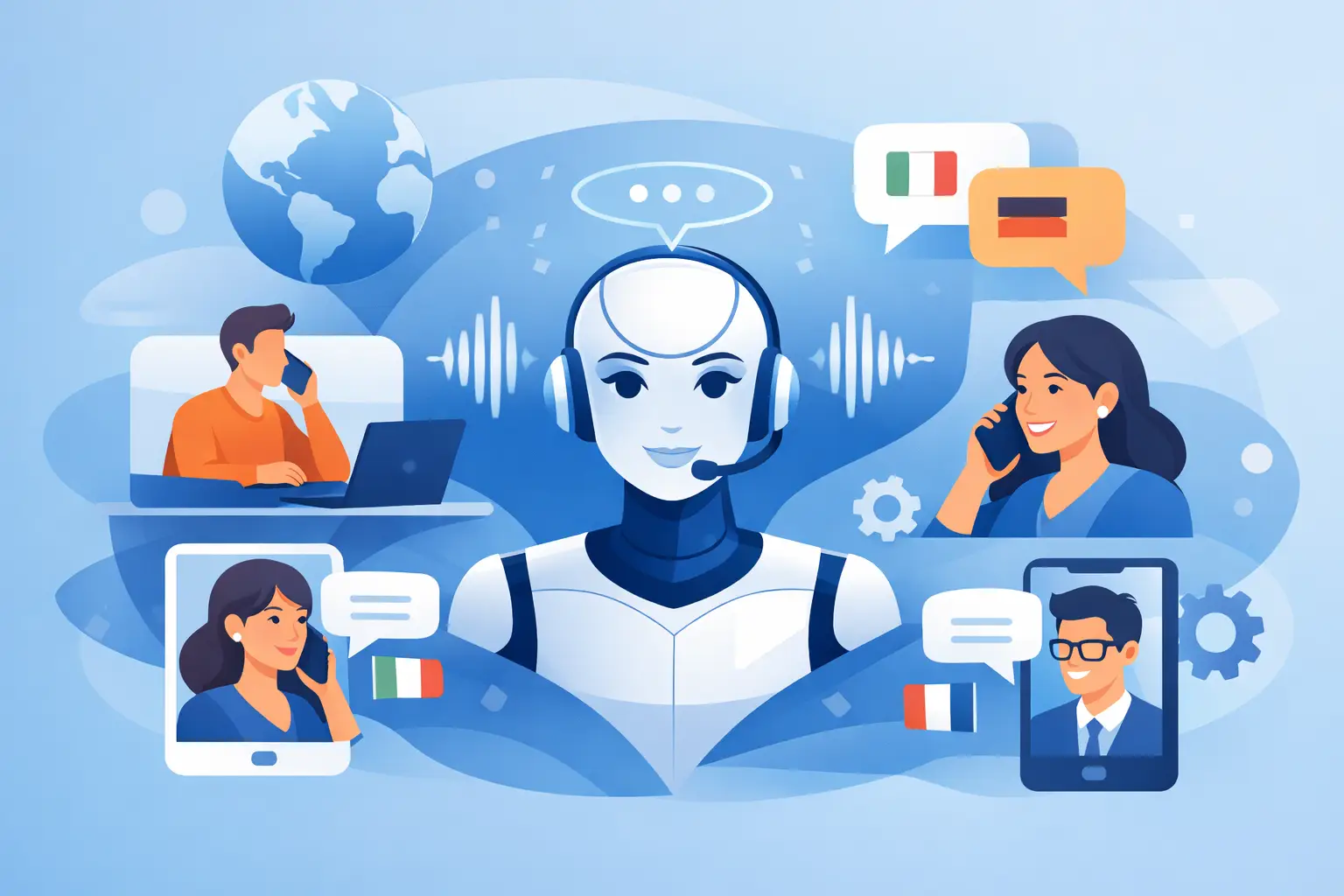
A missed call from a Spanish-speaking patient, a late-night booking request in French, and an outbound reminder campaign that needs to sound local in three regions – this is where the top multilingual AI phone agents separate themselves from basic voice bots. If your business depends on calls, language coverage alone is not enough. You need an agent that can answer accurately, route cleanly, book appointments, sync systems, and hold up under real call volume.
That changes how you should evaluate the market. The best platforms are not just text-to-speech layered onto a phone line. They are operational systems for revenue, support, and follow-up. For clinics, dealerships, legal offices, restaurants, property teams, and agencies serving those clients, the real question is simple: which platform can replace repetitive call work without creating new problems?
What the top multilingual AI phone agents actually do
At a surface level, most vendors claim multilingual voice support. In practice, that can mean anything from a handful of translated prompts to full conversational handling across dozens of languages and accents. There is a big difference between a system that says hello in another language and one that can qualify a lead, answer policy questions, confirm availability, and update your CRM in that same language.
The top multilingual AI phone agents handle both sides of the call operation. They manage inbound calls such as scheduling, FAQs, intake, and after-hours support. They also manage outbound work like reminders, follow-ups, renewal calls, lead qualification, reactivation, and upsell campaigns. If a platform only performs well on one side, it may solve a narrow use case but not your broader phone workload.
This is why operations teams should evaluate these tools like call infrastructure, not novelty AI. The strongest options reduce missed revenue, shorten response times, and lower staffing pressure while giving managers visibility into transcripts, outcomes, and transfers.
How to judge multilingual voice AI in the real world
Language count is the easiest metric to market and one of the least useful on its own. A platform may support many languages, but what matters is call quality under business conditions. Can the agent switch languages mid-call? Can it recognize local accents? Can it follow a controlled script while still sounding natural? Can it pull answers from your approved knowledge base instead of guessing?
For most SMBs and multi-location operators, five areas matter more than a long feature list.
First is business workflow fit. If your front desk books through Google Calendar, HubSpot, Calendly, GoHighLevel, or a practice management tool, the AI agent has to update those systems in real time. If it cannot take action, your team ends up doing manual cleanup, and the labor savings disappear.
Second is concurrency. A multilingual agent that sounds great on one call but cannot handle spikes is not much help during lunch rush, campaign volume, or after-hours overflow. Parallel call capacity matters because the whole point is to remove queues and stop calls from going to voicemail.
Third is handoff control. Not every call should stay with AI. Billing disputes, sensitive legal matters, and high-value sales conversations often need a live transfer. Good platforms treat human handoff as part of the workflow, not as a failure state.
Fourth is reporting. If you cannot see recordings, transcriptions, booking outcomes, abandonment trends, and conversion data, you cannot improve the operation. This matters even more in multilingual environments where managers need proof that the agent is handling intent correctly.
Fifth is deployment speed. A platform that takes months of custom setup may fit a large enterprise, but it usually does not fit an SMB that needs results now. The practical standard is fast launch, no-code control, and enough governance to keep performance predictable.
The top multilingual AI phone agents to watch
The market is moving fast, but most options fall into a few clear categories.
AI phone platforms built for business operations
These are the strongest fit for companies that want one system for inbound, outbound, booking, routing, reporting, and integrations. They are designed to do actual call-center work, not just answer simple questions. This category is usually the best choice for healthcare groups, home service teams, dealerships, legal offices, and agencies managing client call flows.
What sets the leaders apart is their ability to combine telephony, multilingual voice, workflow automation, and reporting in one place. Instead of stitching together separate vendors for numbers, voice generation, scheduling logic, CRM sync, and analytics, you get a single operating layer for calls. That means faster rollout and fewer points of failure.
Cloud One-Ai fits this category well because it combines global numbers, 100-plus languages and accents, inbound and outbound handling, 50-plus simultaneous calls, knowledge-base ingestion, reporting, and human transfer in one platform. That matters for operators who want to deploy quickly and avoid a fragmented stack. It is also relevant for agencies that need white-label controls, subaccounts, and rebilling rather than just another single-location tool.
The trade-off is that operations-first platforms may feel more structured than lightweight consumer-style voice tools. That is usually a good thing for businesses, but teams looking for open-ended experimentation may prefer something looser.
Contact center platforms adding AI voice layers
Some businesses already run on legacy contact center software and want to add multilingual AI voice without replacing the whole environment. These tools can work well for larger support teams with established routing, QA, and workforce processes.
The upside is continuity. The downside is complexity. AI often becomes an add-on rather than the core engine, which can slow deployment and increase cost. For SMBs, this route can be heavier than necessary unless there is already a strong internal ops or IT team managing the system.
Conversational AI builders with phone integrations
Then there are flexible AI builders that let teams design conversational logic and connect telephony separately. These can be powerful for technical teams or agencies building custom experiences across multiple channels.
But this flexibility comes with work. You may need extra tooling for phone numbers, reporting, calendar logic, human transfer, and CRM actions. If your goal is to create fast business outcomes, not manage architecture, builder-style platforms can become a project rather than a deployment.
Where multilingual AI phone agents create the most ROI
The biggest returns usually come from repetitive call categories with clear outcomes. Appointment booking is the obvious one. If your office misses calls after hours or during peak periods, an AI phone agent can answer instantly, book into the right calendar, and confirm details in the caller’s preferred language. That improves show rates and captures revenue that would have been lost.
Support is another strong use case, especially for common questions about hours, location, insurance, menu items, service areas, case status, or basic account information. The key is keeping the agent grounded in approved answers and escalating when the issue moves beyond policy.
Outbound calling is where many buyers underestimate the value. Reminders, reactivation campaigns, lead qualification, follow-ups, renewals, and review requests all benefit from multilingual delivery. If your database includes customers who prefer Spanish, Vietnamese, French, or Arabic, outreach performance improves when the call sounds natural and relevant instead of generic.
For agencies and resellers, the ROI story is slightly different. The opportunity is not only internal labor savings. It is packaging a high-demand service that clients can understand quickly: fewer missed calls, better response times, more booked appointments, and better coverage across languages without hiring more staff.
What can go wrong
Not every business should buy the same platform, and not every multilingual workflow should be automated end to end. Highly sensitive industries may require tighter controls over disclosures, consent language, and escalation paths. Some businesses need strong compliance features and auditability before they automate even simple conversations.
There is also the script-versus-flexibility trade-off. A tightly controlled agent is safer and easier to optimize, but it can feel rigid if the call flow is too narrow. A more flexible agent can sound natural, but it needs guardrails so it does not improvise beyond approved information. The right balance depends on the call type.
Another common mistake is overvaluing language count and undervaluing implementation. If a platform supports many languages but your team cannot build, test, monitor, and refine the workflows quickly, the project stalls. Execution beats brochure specs.
How to choose without wasting a quarter
Start with one revenue-linked workflow. After-hours booking, lead qualification, missed-call text-back plus call recovery, or multilingual reminder campaigns are good places to begin. Pick a use case where success is easy to measure in booked appointments, recovered leads, reduced hold times, or lower admin hours.
Then test the platform on five practical questions. Can it handle your required languages well? Can it take action inside your systems? Can it transfer to a human cleanly? Can it manage your expected call volume? Can your non-technical team control it without opening a support ticket every week?
That framework usually narrows the market quickly. The top multilingual AI phone agents are not the ones with the flashiest demo voice. They are the ones that keep calls moving, keep data clean, and keep your staff focused on work that actually needs a person.
If your phones are tied to revenue, treat multilingual voice AI like an operational upgrade, not a pilot project. The best choice is the one your team can launch fast, trust under pressure, and scale across every location and language your business serves.