



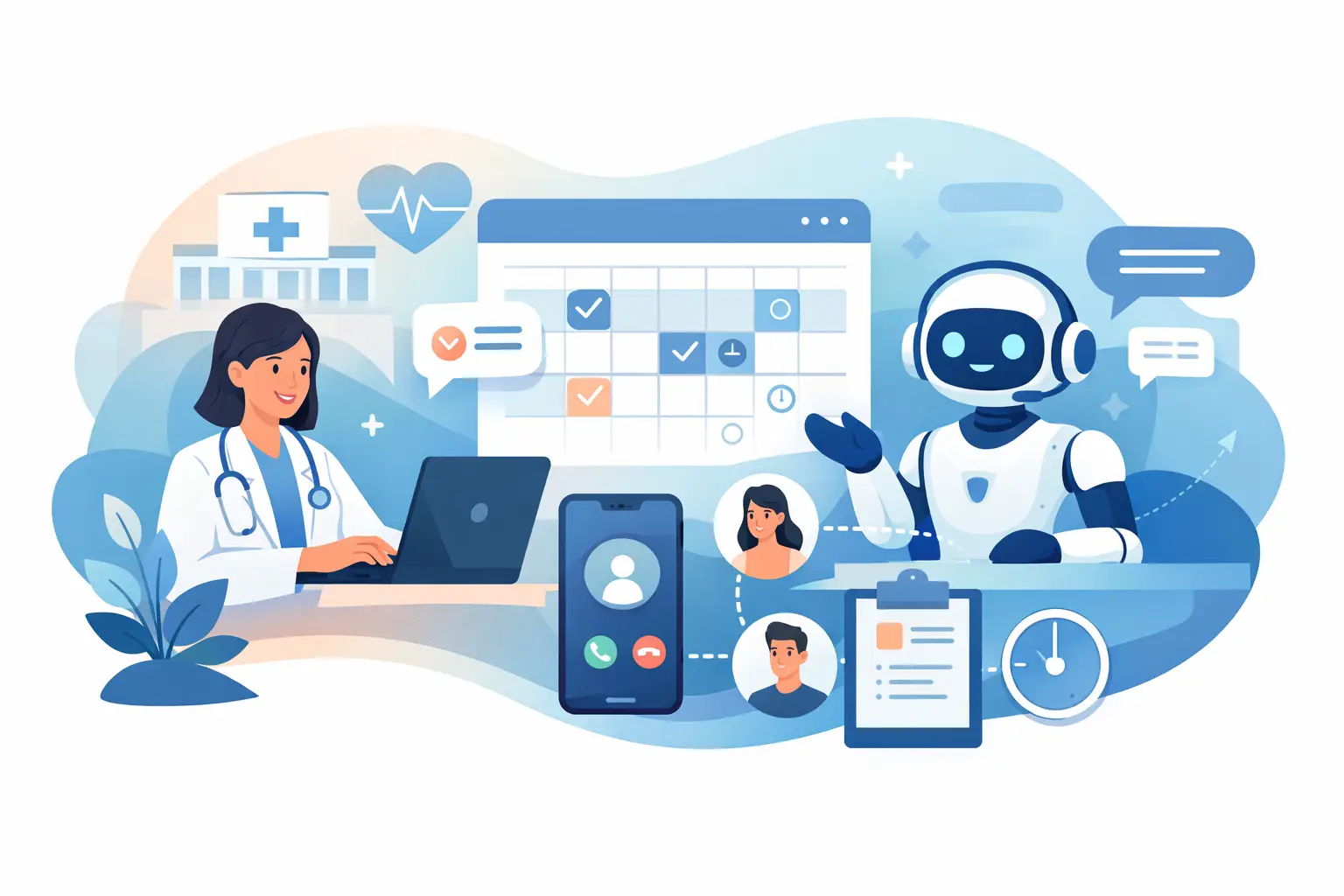
A missed call at 4:47 PM can turn into an empty chair tomorrow morning. For clinics, that is not just a scheduling problem. It is lost revenue, front-desk pressure, and a patient experience issue that usually shows up after hours, during lunch breaks, or when staff are already juggling insurance questions, reschedules, and intake.
That is why the search for the best AI appointment setter for clinics has picked up speed. Not because AI is trendy, but because phone volume is still real, staffing is expensive, and patients expect fast answers. The right system can answer instantly, book accurately, confirm appointments, and escalate when a human needs to step in. The wrong one creates confusion, bad bookings, and more cleanup work for your team.
What the best AI appointment setter for clinics actually does
A clinic-ready AI appointment setter is not just a chatbot with a phone number. It needs to manage live calls, understand patient intent, and move a caller from question to confirmed appointment without forcing the front desk to babysit the process.
At a minimum, it should answer inbound calls, qualify the reason for the visit, offer available time slots, book directly into your calendar or practice workflow, and send follow-up confirmations. It should also handle common call paths like new patient inquiries, returning patient reschedules, location routing, and basic FAQ responses around hours, services, or preparation instructions.
The stronger platforms go further. They can manage outbound reminders, reactivate missed opportunities, support multiple clinic locations, and transfer complex calls to staff with full context. That matters because most clinics do not just need appointment booking. They need fewer interruptions, faster response times, and a system that holds up on busy days.
How clinics should evaluate AI appointment setters
The best buying decision usually comes down to operations, not novelty. A polished demo means very little if the system cannot connect to your scheduling stack or if it falls apart when five patients call at once.
Calendar and workflow integration
This is the first filter. If the AI cannot write appointments into the tools your team already uses, it will create double entry and errors. Clinics should look for direct calendar and workflow integrations, not just vague claims about automation. If your staff works inside a CRM, calendar platform, or patient flow system, the AI should fit that environment.
Integration depth also affects speed to deployment. A tool that can connect to calendars, CRMs, and operational systems quickly will get results faster. A tool that requires workarounds will drag out implementation and create hesitation on the front desk.
Voice quality and call handling
Patients still judge your clinic by the phone experience. If the voice sounds stiff, delays too long, or misunderstands common requests, trust drops fast. Natural voice quality matters, but so does turn-taking, interruption handling, and the ability to recover when a caller changes direction mid-sentence.
Clinics should also test how the system performs under load. Can it handle parallel calls during peak windows? Can it route by department or location? Can it transfer to staff without dropping context? Those are operational questions, and they separate a real scheduling layer from a novelty feature.
Rules, guardrails, and human handoff
Healthcare scheduling is not one-size-fits-all. Some visits need longer slots. Some insurance or provider questions should go to staff. Some callers need immediate escalation. The best AI appointment setter for clinics gives you control over scripts, scheduling rules, and transfer conditions.
That control matters for risk management too. Clinics need a system that stays within approved knowledge, logs calls, and supports reporting. If a call cannot be completed confidently, the AI should hand it off cleanly instead of guessing.
Reporting that ties to revenue
If you cannot measure missed calls recovered, appointments booked, or after-hours conversions, you are buying blind. Good reporting should show volume, outcomes, transcripts, recordings, and trends. Great reporting helps operators spot drop-off points, improve call flows, and prove ROI fast.
For clinic operators, this is where AI either becomes infrastructure or gets cut. If it reduces no-shows, books more appointments, and frees staff for higher-value work, it stays. If it only sounds impressive in a demo, it does not.
Where most clinic teams get the decision wrong
Many clinics start by asking which AI tool sounds the most human. That is understandable, but it is not enough. The better question is which platform can reliably book the right appointment, in the right location, under the right rules, without creating downstream cleanup.
Another common mistake is buying a narrow point solution. A standalone answering bot may cover one use case, but clinics often need more than inbound scheduling. They need reminders, rebooking, multilingual support, overflow handling, outbound follow-up, and reporting in one place. Fragmented tools can work, but they usually create more vendors, more failure points, and more admin.
Price can also be misleading. A lower monthly fee may look attractive until you factor in missed bookings, manual corrections, or the need for separate telephony, automation, and analytics tools. The best option is usually the one that lowers total operational drag, not just software spend.
What the best AI appointment setter for clinics looks like in practice
In a small specialty clinic, the value may be simple. The AI answers every call, books appointments after hours, and handles routine reschedules so staff can focus on in-office patients. That alone can reduce missed opportunities and improve the patient experience.
In a multi-location group, the bar is higher. The system needs to route by location, support multiple calendars, handle surges in parallel, and maintain consistency across sites. It also needs enough reporting to show which locations are missing calls, which campaigns are driving bookings, and where patient drop-off is happening.
For growing operators, multilingual capability becomes a real advantage. Many clinics serve patient populations that are more comfortable booking in Spanish or another language. If the AI can handle those calls naturally, the clinic captures more demand without hiring a larger multilingual front-desk team.
This is where an operations-first platform stands out. Cloud One-Ai, for example, is built like calling infrastructure rather than a single-purpose bot. It supports inbound and outbound voice workflows, 300+ integrations, 50+ simultaneous calls, multilingual coverage across 100+ languages and accents, reporting with recordings and transcripts, knowledgebase ingestion, and human transfer when needed. For clinics that want to deploy fast and avoid stitching together telephony, voice AI, and automation layers, that all-in-one model solves a real operational problem.
Trade-offs to consider before you choose
There is no universal winner for every clinic. A two-provider office with low call volume may not need advanced outbound campaigns or multi-location routing. A regional operator probably does. The right fit depends on call volume, scheduling complexity, language needs, and how much control your team wants over call flows.
There is also a balance between speed and customization. Some platforms are easy to launch but limited in workflow depth. Others can support more nuanced logic but take longer to configure well. If your team needs to go live quickly, prioritize strong defaults and easy no-code setup. If your clinic has more complex scheduling rules, make sure the system can handle them before rollout.
Compliance and governance should stay in the conversation too. Clinics do not need a science project. They need controlled scripts, defined handoff points, and reliable reporting. Fancy features are secondary if the basics are not stable.
A practical checklist for shortlisting vendors
Start with your real call patterns. Review how many calls you miss, when the spikes happen, which requests are repetitive, and where staff time gets drained. Then test vendors against live use cases, not idealized demos.
Ask them to show how the AI handles a new patient booking, a reschedule, a provider-specific request, an after-hours call, and a transfer to staff. Ask what happens when a caller interrupts, changes locations, or asks something outside the script. If the answers are vague, the deployment will be too.
Finally, look at implementation speed and ownership. Can your operations team control the flows without engineering help? Can you update knowledge, scripts, and routing rules quickly? The best system is the one your clinic can actually run, improve, and trust every day.
The best AI appointment setter for clinics is the one that makes your phones easier to operate, not more complicated. If it cuts missed calls, books accurately, and gives your team breathing room, it is doing its job. Start there, and the ROI usually shows up faster than expected.