



Missed calls are expensive, and most teams do not lose revenue because they lack demand. They lose it because the phone rings at the wrong time, after hours, during lunch, or while staff are tied up handling routine questions. No code call automation fixes that operational gap fast. It gives businesses a way to answer, qualify, route, book, follow up, and support customers by phone without waiting on developers or stitching together a pile of tools.
For clinics, dealerships, legal offices, restaurants, and sales teams, that matters because the phone is still where urgency lives. A web form can wait. A caller usually will not.
What no code call automation really means
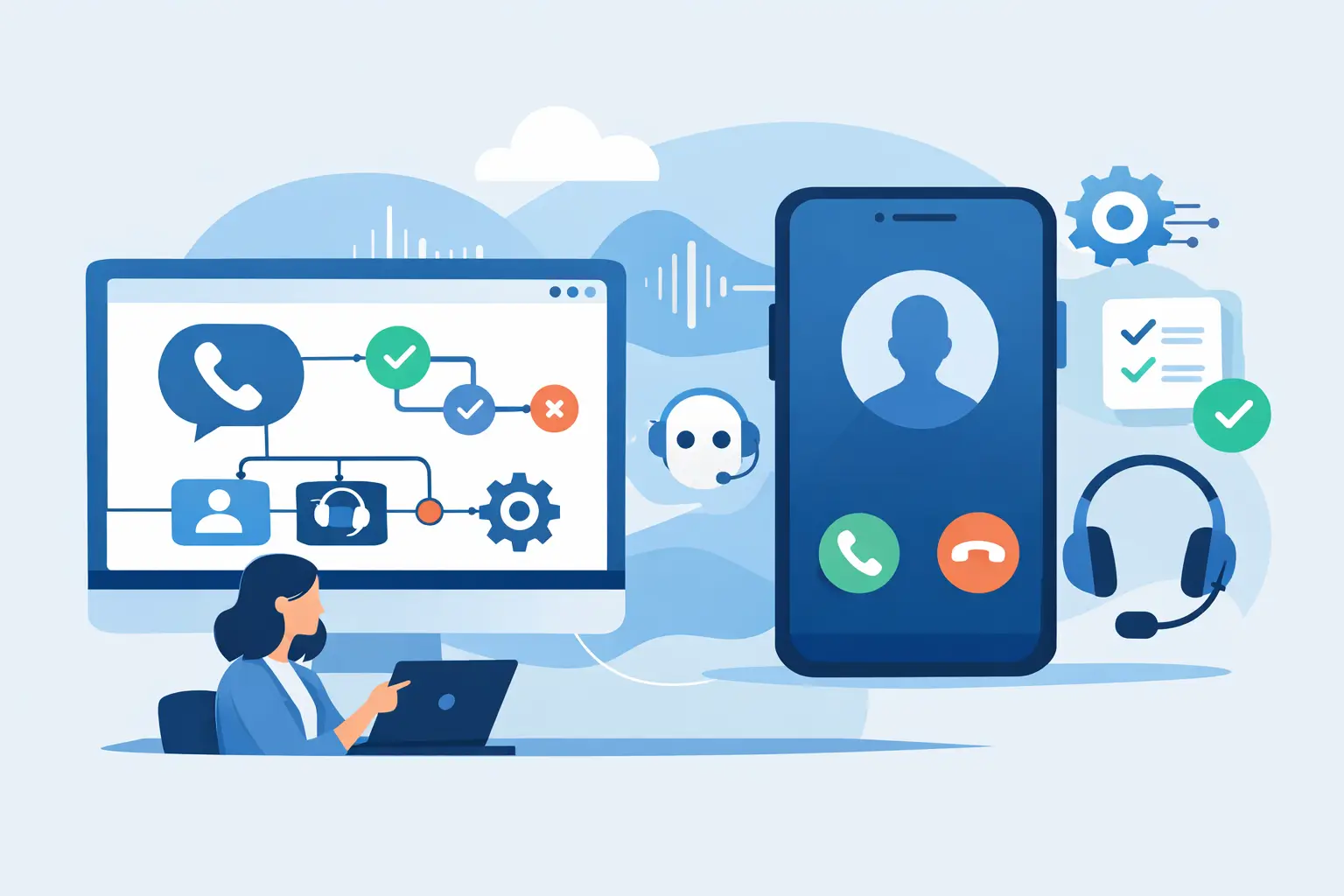
At its core, no code call automation means building phone workflows without writing software. Instead of relying on engineers, ops teams can configure an AI voice agent, define call logic, connect calendars and CRMs, and launch inbound or outbound call flows through a visual setup.
That sounds simple, but the difference is bigger than convenience. Traditional call automation often meant rigid IVRs, robotic prompts, and painful implementation cycles. Modern voice AI changes the model. Businesses can now deploy agents that sound natural, pull answers from a knowledge base, transfer to a human when needed, and log every interaction back into the systems the team already uses.
The no-code part is what makes it commercially useful. If every change still requires technical resources, automation becomes a backlog item instead of an operating advantage.
Why businesses are moving to no code call automation
Most phone-heavy businesses are dealing with the same pressure. Labor costs are up. Customers expect immediate responses. Lead response speed affects close rates. And manual call handling creates inconsistency at scale.
No code call automation gives operators more control over those variables. A front desk can reduce missed appointment calls. A sales team can run lead qualification around the clock. A support team can answer common questions without increasing headcount. A multi-location business can standardize call handling across every site instead of hoping each location follows the same script.
The appeal is not that AI sounds futuristic. The appeal is that it removes bottlenecks.
If a dental office misses ten new patient calls a week, that is not a communications problem. It is a revenue problem. If a dealership takes too long to follow up on inbound leads, that is not just a process issue. It is a conversion leak. If a law firm spends staff time answering repetitive intake questions, that time is no longer available for higher-value work.
Where no code call automation delivers the fastest ROI
The best use cases are high-volume, repetitive, and time-sensitive. Appointment booking is an obvious one. When callers want to schedule, reschedule, or confirm, the task follows a pattern. Voice AI can handle the conversation, check availability, and update the calendar in real time.
Inbound lead qualification is another strong fit. Instead of sending every caller to voicemail or a general inbox, an AI agent can ask the right questions, capture intent, tag the lead, and route qualified opportunities to the correct person. That shortens response times and keeps sales reps focused on leads that are ready to move.
Outbound workflows also perform well when the process is structured. Think follow-ups, reminders, renewals, payment prompts, review requests, and win-back campaigns. These are important calls, but they are often inconsistent because teams are busy. Automation adds consistency without adding payroll.
Customer support can also benefit, especially for after-hours coverage and repetitive requests. Store hours, appointment status, service availability, pricing ranges, location details, and policy questions are common examples. The trade-off is that support automation needs tighter controls. When calls get more nuanced or sensitive, human handoff matters.
What to look for in a no-code platform
Not every voice tool is built for real operations. Some products sound good in demos but fall apart when you need live routing, reporting, compliance controls, and integration depth.
A usable no code call automation platform should let non-technical teams do four things well: configure the conversation, connect business systems, control escalation paths, and measure outcomes.
Conversation control means you can shape how the agent speaks, what questions it asks, and what it should never say. This is especially important in regulated or high-trust industries like healthcare and legal services. You do not want a general-purpose bot improvising outside approved boundaries.
System connectivity is just as important. If call data stays trapped in the phone tool, your team ends up doing manual cleanup anyway. The practical value comes when calls update the CRM, trigger workflows, sync to calendars, log dispositions, and support reporting.
Escalation paths matter because not every call should stay automated. Good systems allow transfers to humans, fallback logic, voicemail handling, and department-based routing. That protects the customer experience when the conversation needs judgment or empathy.
Then there is visibility. You should be able to review recordings, transcriptions, outcomes, trends, and agent performance without pulling a separate analytics project together.
The trade-offs most buyers miss
No code call automation is powerful, but it is not magic. The best results come from good process design, not just good software.
If your team does not know what qualifies a lead, the AI will not fix that. If scheduling rules are messy across locations, automation can expose the inconsistency faster than it solves it. If your knowledge base is outdated, the agent may answer confidently with old information. That is why implementation should start with one or two high-value workflows, then expand.
There is also a customer experience trade-off to manage. Some callers want speed and are happy to use automation if it gets them booked or answered quickly. Others want a person immediately, especially for sensitive issues. The right setup respects both. Offer automation where it helps, and make human transfer easy where it matters.
Language support is another area where buyers should think carefully. Multilingual coverage sounds great, but real value comes from reliable performance in the specific languages, accents, and regions your business serves. Broad capability is useful. Operational accuracy is better.
How teams should roll it out
The fastest path is not automating everything at once. Start with a workflow that is repetitive, easy to measure, and tied to revenue or service quality.
For many businesses, that means missed inbound calls. Put an AI agent in front of overflow and after-hours traffic. Let it answer questions, collect details, and book appointments where possible. You can measure impact quickly through reduced abandonment, more booked calls, and better capture rates.
From there, add outbound reminders and lead follow-up. These are predictable workflows where timing matters. Once the team sees performance, expand into qualification, support, and multi-location standardization.
This is also where an operations-first platform stands out. Speed matters, but control matters more. You want deployment in days, not months, with enough flexibility to adapt scripts, workflows, and routing as the business changes. Cloud One-Ai is built around that model, giving teams a practical way to launch voice agents fast, connect them to business systems, and keep humans in the loop when the call requires it.
Why agencies and resellers are paying attention
No code call automation is not just a direct business tool. It is also becoming a service category. Agencies, consultants, and software resellers can package AI calling into existing client relationships without building telephony infrastructure from scratch.
That changes the economics. Instead of selling one-time setup work, they can offer recurring automation services tied to lead handling, appointment capture, support coverage, and outbound performance. White-label options make that even more attractive for firms that want to own the client relationship and billing experience.
The catch is execution. Reselling voice AI only works if the underlying platform supports subaccounts, reporting, usage controls, and reliable deployment. If support is weak or workflows are hard to manage, the service becomes hard to scale.
The real test: does it remove work or create more of it?
That is the question worth asking before buying anything in this category. Good no code call automation should reduce missed calls, shorten response time, and lower manual effort from week one. It should give managers more visibility, not more dashboards to babysit. And it should help teams move faster without turning every script change into a technical project.
The strongest solutions do not try to replace every human conversation. They handle the repetitive calls well, stay within defined guardrails, and pass control cleanly when a real person is needed. That is what makes the system reliable enough for live operations.
If your business depends on the phone, the opportunity is straightforward. Stop treating calls like a staffing problem only. Treat them like a workflow problem, then automate the part that repeats. That is usually where the margin is hiding.