



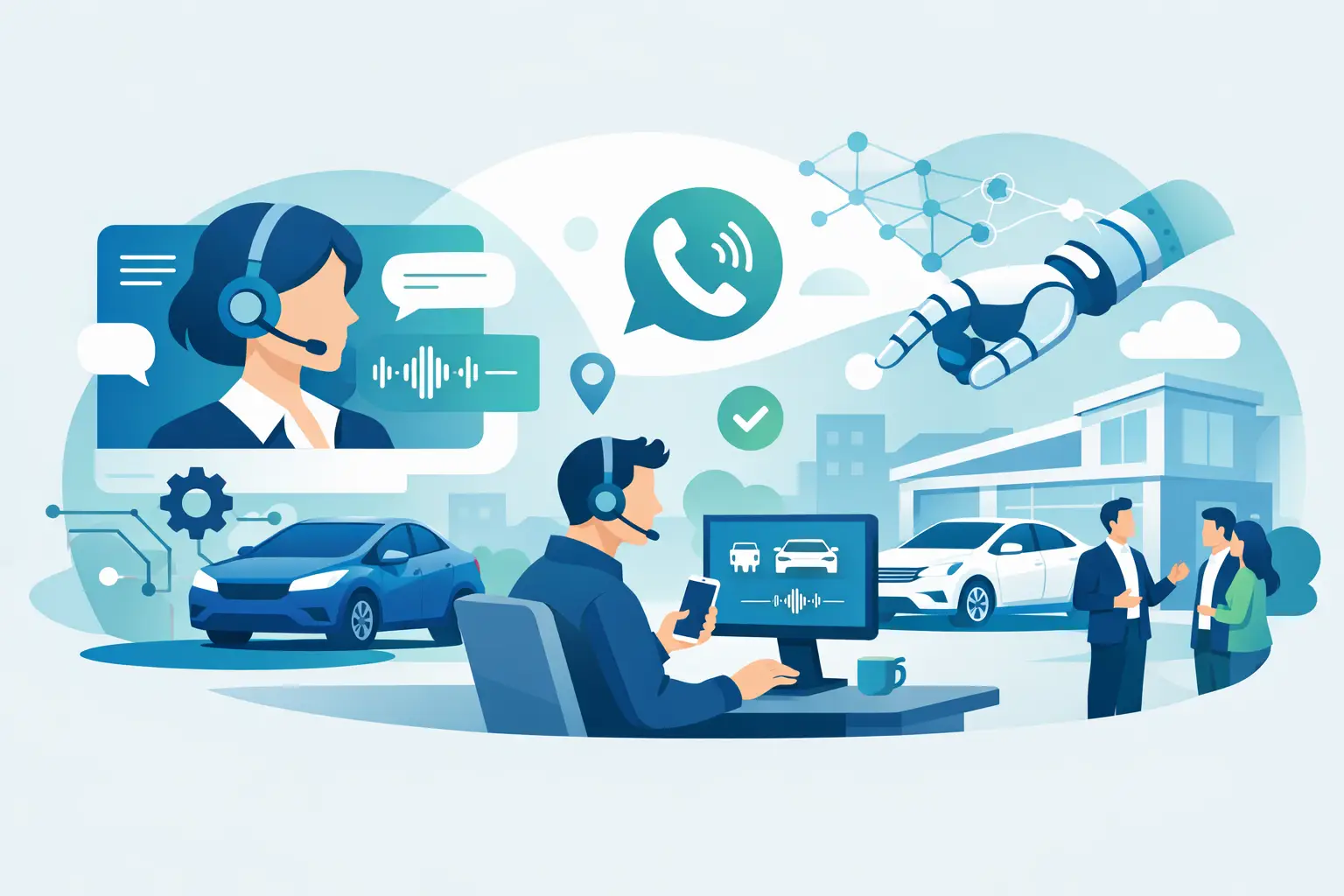
A dealership can spend thousands generating a lead, then lose the opportunity because a salesperson was tied up with a customer on the floor. That is the operating problem behind this case study outbound AI calling for dealerships: not replacing the sales team, but making sure every prospect receives a fast, useful follow-up before interest fades.
The scenario below reflects a common multi-rooftop dealership workflow. The goal is simple: re-engage unsold leads, identify shoppers who are still in market, and place qualified appointments directly on the sales calendar. The bigger lesson is that outbound calling works when it is treated as a controlled revenue operation, not a blast campaign.
The dealership challenge: leads were aging faster than follow-up
The dealership group had steady lead volume from website forms, paid search, third-party marketplaces, service-lane opportunities, and past customer records. Its problem was not a shortage of names. It was the gap between a lead arriving and a meaningful conversation taking place.
Sales representatives prioritized customers already in the showroom, inbound calls, deal paperwork, and immediate internet responses. Leads that did not answer the first attempt often slipped into a generic follow-up queue. After several days, the record might receive an email or text, but no one had confirmed whether the customer was still shopping, had bought elsewhere, or wanted help finding a specific vehicle.
This created three expensive issues. Managers could not reliably see which leads had been worked and which had simply been dialed. Salespeople spent time calling dead records instead of speaking with active buyers. And appointments were inconsistent because outreach depended on who had time between walk-ins.
The group needed a calling layer that could operate after hours, make rapid first contact, update the CRM, and transfer real buying conversations to a person when needed. It also needed guardrails. Vehicle availability, pricing language, offer terms, consent requirements, and escalation rules had to remain under dealership control.
The outbound AI calling workflow
Rather than asking an AI agent to sell a car, the dealership assigned it a narrow, high-value job: start conversations and create qualified next steps.
New web leads entered the CRM and triggered an outbound call within a defined response window. The agent introduced itself clearly, referenced the shopper’s stated interest, and asked a short set of qualifying questions. Was the customer still considering a vehicle? Were they shopping new, used, or both? Did they have a preferred time to visit? Would they like to speak with a product specialist now?
For aging leads, the conversation changed. The agent did not pretend the customer had just submitted a form. It used a reactivation message tied to the prior inquiry: the dealership was following up to see whether the customer was still looking and whether a current inventory or financing conversation would be helpful.
When a prospect wanted to visit, the agent checked the dealership calendar and offered approved appointment windows. Once the time was confirmed, it wrote the disposition, notes, and appointment details back to the CRM. The assigned salesperson received the alert with the conversation context instead of a bare calendar entry.
If the customer asked a question outside the approved knowledge base, objected to speaking with automation, requested detailed deal terms, or was ready to negotiate, the workflow transferred the call to a live team member. That handoff matters. The AI agent should remove repetitive dialing and initial qualification, while the dealership team handles judgment-heavy conversations.
The script was designed for momentum, not pressure
The most effective calls were brief and specific. A long script with every feature, rebate, trim level, and warranty detail created friction. The agent needed enough information to make the call relevant, then a clear reason to schedule the next step.
For example, a shopper who requested information about a midsize SUV did not need a monologue about the full lineup. They needed a simple path: confirm that they are still shopping, understand whether they have a trade-in or timing requirement, and offer an appointment or live connection.
The dealership also built rules for no-answer outcomes. Depending on consent and contact policy, records could receive a later retry, a text follow-up, or a task for a salesperson. Calls stopped when the customer opted out, when the lead status changed to sold or lost, or when the allowed outreach sequence was complete.
What the dealership measured
A deployment like this should not be judged by call volume alone. More dials can simply mean more interruption. The dashboard needs to show whether calls create legitimate selling opportunities and whether the sales team can convert them.
The group tracked speed to first call, live connect rate, qualified conversation rate, appointments booked, appointment show rate, transfer outcomes, opt-outs, and CRM disposition accuracy. Managers reviewed recordings and transcripts to identify where prospects disengaged, which objections appeared most often, and whether the agent followed approved language.
The metric chain also made ownership clear. The AI workflow owned rapid contact attempts, consistent qualification, and accurate data capture. The sales team owned fast response to transferred calls, confirmation outreach before appointments, and showroom conversion. When a booked appointment did not show, the record returned to a defined recovery sequence instead of disappearing into a stale task list.
This separation prevents a common mistake: expecting automation to fix a broken handoff process. If salespeople receive alerts late, calendars contain inaccurate availability, or the CRM has duplicate records, an outbound agent will expose those problems quickly. The fix is operational discipline, not more call volume.
Why the approach worked
The operational advantage came from consistency. Every eligible lead received a timely attempt based on a defined workflow, including evenings and weekends when many shoppers were researching. The dealership did not need to wait for a salesperson to finish a showroom interaction before beginning outreach.
It also gained better lead intelligence. A record that once said only “no response” could now show that the shopper bought elsewhere, plans to purchase in 90 days, needs a vehicle with third-row seating, or wants to discuss a trade-in. That information gives salespeople a reason for the next conversation and gives managers a more accurate view of pipeline quality.
Multilingual coverage was another practical benefit for stores serving diverse markets. A caller who can comfortably continue in the customer’s preferred language is more likely to gather usable information and secure a next step. The important condition is to keep language support aligned with approved scripts, knowledge, and escalation paths.
Cloud One-Ai supports this model with outbound campaigns, CRM and calendar workflows, knowledge-base controls, recordings, transcripts, reporting, and live human transfer. A dealership can configure an agent around a specific use case rather than asking one generic bot to cover sales, service, finance, and support at once.
The trade-offs dealerships need to manage
Outbound AI calling is not a license to call every record indefinitely. Dealerships must establish consent, calling windows, opt-out handling, state and federal requirements, and brand-approved disclosures before a campaign goes live. Legal and compliance teams should review the workflow, particularly for automated outreach, call recording, and marketing communications.
Data quality is equally important. If the CRM sends an agent outdated inventory interest, a sold customer, or a duplicate phone number, the experience deteriorates fast. Before launch, teams should define which lead sources qualify, suppress sold and do-not-contact records, standardize dispositions, and test calendar availability.
There is also a boundary between qualification and sales advice. An agent can confirm interest, schedule a test drive, capture trade-in intent, and route a customer to the right person. It should not improvise payment promises, guarantee inventory, or make claims that are not present in the dealership’s approved information.
A practical rollout plan for dealership leaders
Start with one measurable queue, such as web leads that have not connected with a salesperson within 15 minutes or aged leads from the last 30 days. Keep the first campaign focused enough that managers can inspect every outcome and improve the script quickly.
Next, connect the CRM, calendars, and routing rules. Decide exactly what counts as a qualified appointment, who receives a live transfer, and how missed appointments return to follow-up. Train the team on the handoff process before the first campaign starts. A fast AI call has little value if the transferred shopper reaches voicemail or the appointment arrives without context.
Then review real call data weekly. Listen for friction, check whether notes are useful, compare appointment quality by lead source, and tighten the knowledge base when the same question appears repeatedly. The objective is not to make the agent sound clever. The objective is to reduce response time, increase productive conversations, and put more prepared buyers in front of the sales team.
A dealership’s best opportunity is often sitting in its existing CRM, waiting for a timely call and a clear next step. Build the workflow around that reality, keep the controls tight, and let the sales floor spend more of its day with customers who are ready to move forward.