



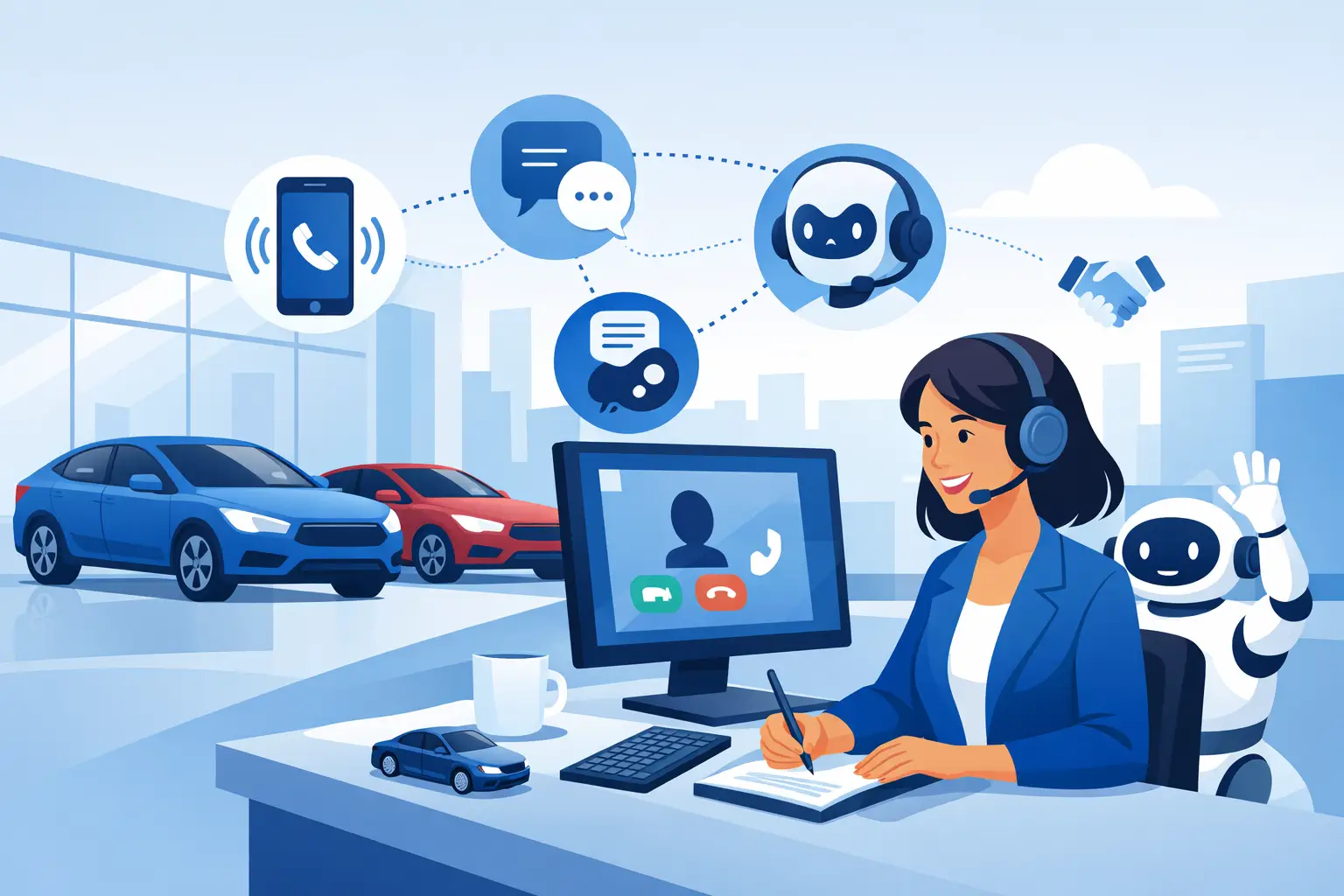
A new lead calls at 7:18 p.m. asking whether a specific SUV is still available. If the call goes to voicemail, the shopper may call the next dealer before your team opens tomorrow. Car dealership phone automation closes that gap by answering immediately, qualifying the caller, and moving qualified buyers toward a test drive or a live sales conversation.
For dealerships, the phone is still a revenue channel, not just a support line. Buyers call to confirm inventory, ask about pricing, check service availability, request trade-in guidance, and schedule appointments. The problem is volume and timing. Front-desk staff are balancing walk-ins, sales teams are working active deals, and service advisors are handling customers at the counter. Calls wait. Leads cool off. Opportunities get logged late, if they are logged at all.
Voice AI changes the operating model. It handles repeatable conversations around the clock, follows approved dealership workflows, and hands off calls that need a person. The goal is not to replace every human conversation. It is to make sure no buyer, service customer, or missed-call follow-up disappears into a queue.
Where Dealership Calls Lose Revenue
The first failure point is speed to answer. A customer who calls after hours, during a sales meeting, or while the receptionist is helping someone else usually has no patience for a long hold. Even a motivated shopper can become a lost lead after one unanswered call.
The second failure point is inconsistent qualification. One caller may be asked for a preferred vehicle, budget, timeline, and contact details. Another may be told someone will call back. When calls are handled differently across shifts or locations, managers lose the ability to measure which conversations became appointments and which ones stalled.
Then there is follow-up. A shopper who asks about a vehicle but does not book a test drive should not vanish from the process. The same applies to customers overdue for oil changes, tire rotations, inspections, warranty work, or recall service. Manual follow-up works when teams have time. Most dealerships do not have enough of it.
What Car Dealership Phone Automation Should Handle
The best use cases are predictable, high-volume calls with clear next steps. Start with the conversations that create the most wait time or produce the most missed opportunities.
Capture and qualify sales leads
An AI voice agent can answer inventory questions using an approved knowledge base, collect the make, model, trim, timeline, financing preference, trade-in status, and best callback information. It can ask whether the caller wants a new, used, certified, or specific vehicle and record the answers directly in the CRM.
It should not invent vehicle availability, pricing, incentives, or finance terms. If real-time inventory data is unavailable or the customer requests a quote that requires a manager, the agent should say so clearly and route the call to the appropriate person. Controlled answers protect the customer experience and prevent the kind of overpromising that creates friction on the showroom floor.
Book test drives without waiting for a callback
A booked appointment is more valuable than a vague promise to reconnect. Phone automation can check available appointment windows, offer times, confirm the vehicle of interest, and send the details to the sales calendar. The lead arrives with context, and the assigned rep knows what the customer wants before the conversation begins.
The workflow should also include confirmation and reminder calls. A short reminder can reduce no-shows, especially when it confirms the location, appointment time, and vehicle. For multi-location groups, the system can direct callers to the correct store based on ZIP code, inventory, or the department they need.
Keep service lanes moving
Service departments often carry a larger and more consistent call load than sales. Customers call to schedule maintenance, ask whether a repair is complete, check hours, reschedule appointments, and clarify what to bring. Many of these calls can be resolved without placing a customer on hold.
An automated agent can schedule standard service visits, capture the vehicle year, make, model, and issue, and send appointment details into the service calendar or dealer management workflow. It can also handle overflow during peak morning hours, when advisors are checking in vehicles and phones are most likely to ring unanswered.
For repair status, the rules need to be precise. If the system is connected to an approved status source, it can share permitted updates. If not, it should collect the customer’s details and create a priority callback task instead of guessing.
Run outbound follow-up at scale
Outbound calling is where many dealerships see immediate operational leverage. Automated campaigns can contact web leads who did not answer an email, confirm tomorrow’s appointments, follow up after a test drive, reactivate past customers, and remind service customers about recommended maintenance.
This is not a license for indiscriminate dialing. Calls must follow consent requirements, internal contact policies, calling-hour rules, and opt-out procedures. The strongest campaigns are targeted and timely. A customer who requested information on a vehicle this morning deserves a fast call. A customer who opted out does not.
Build the Workflow Before You Pick the Voice
A realistic voice matters, but dealership results come from workflow design. Before launching car dealership phone automation, map the call paths your team already manages. Identify which calls should be resolved automatically, which should create a task, and which must transfer immediately to a person.
For a sales lead, a simple flow may be: identify the vehicle interest, confirm basic availability or explain the next step, collect contact information, offer a test-drive time, create the CRM record, and notify the assigned rep. For a service caller, the flow may be: identify the service need, collect vehicle details, offer appointment slots, confirm the booking, and send reminders.
Escalation rules are just as important. Finance questions, complaints, active deal negotiations, safety concerns, and frustrated customers should have a defined human handoff. The transfer should include a short summary so the customer does not have to repeat everything. That is the difference between automation that feels helpful and automation that feels like a barrier.
Connect the systems your team already uses
A call that ends in a disconnected transcript creates more admin work. The practical value comes from pushing call data into the systems that run the dealership: CRM, calendars, lead-routing tools, and reporting dashboards.
Every completed call should produce useful data: caller identity where available, intent, vehicle or service interest, appointment outcome, transcript, recording, disposition, and follow-up action. Sales managers can then see which sources generate phone leads, which campaigns book appointments, and where callers drop off.
Platforms such as Cloud One-Ai are designed for this operational layer, combining inbound and outbound voice agents with CRM and calendar workflows, multilingual calling, reporting, and human transfer options. That matters when one location has a handful of calls per day and another needs to manage high-volume campaign activity at the same time.
Measure More Than Call Volume
A dealership can answer every call and still underperform if the calls do not turn into booked appointments, showroom visits, or completed service work. Track metrics that reveal whether the automation is producing revenue and reducing workload.
Focus on answer rate, abandoned-call rate, average speed to answer, lead capture rate, appointment booking rate, appointment show rate, transfer rate, and conversion by call source. For service, measure booked appointments, reschedules saved, and recovered missed calls. For outbound campaigns, measure contact rate, opt-out rate, qualified conversations, and appointments created.
Listen to recordings early and often. The first week of calls will show where the script is too long, where customers ask questions the knowledge base does not cover, and where a transfer needs to happen sooner. Update the flow based on real conversations, not assumptions.
Start With One High-Impact Call Type
Trying to automate every department on day one can slow deployment and make results harder to evaluate. Start where missed calls are frequent and the next action is clear. After-hours sales lead capture, test-drive booking, service scheduling, and appointment confirmations are usually strong first workflows.
Give the agent a defined job, approved answers, clear handoff conditions, and a direct connection to the system your team uses every day. Then monitor outcomes for two to four weeks and expand based on what is working.
The dealership that responds first does not always win the sale. The dealership that responds first, captures the right details, and makes the next step easy gives itself a much better chance. Make every call count while your team focuses on the conversations only people can close.