



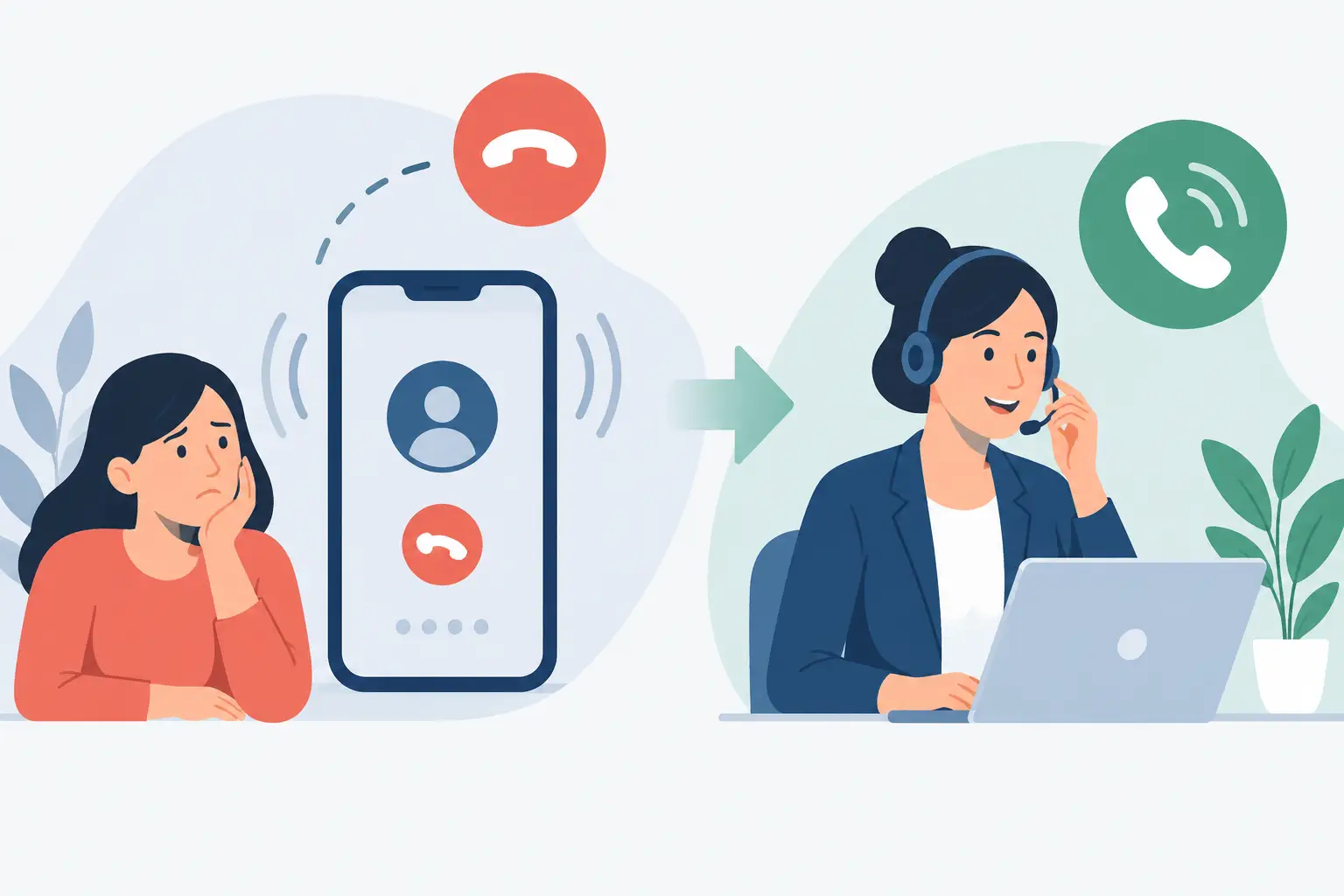
A caller who hangs up after 30 seconds is rarely just a missed call. For a dental office, it may be a patient ready to schedule. For a dealership, it may be a buyer asking about a vehicle they saw online. For a legal practice, it may be a high-intent lead calling several firms at once. Understanding why calls get abandoned is the first step to protecting revenue that is already trying to reach you.
Call abandonment is an operations problem, not simply a staffing problem. It happens when the caller experiences too much waiting, too much friction, or too little confidence that someone can help. The fix is not always hiring more people. It is building a call operation that answers, routes, resolves, and follows up without leaving customers in a queue.
Why Calls Get Abandoned in High-Intent Moments
Most callers do not abandon because they suddenly no longer need help. They abandon because another option feels easier. When someone calls a restaurant to make a reservation, a clinic to confirm insurance, or a real estate team about a listing, they expect a fast answer. Every ring changes the odds.
The most common cause is wait time. A caller may tolerate a brief hold when they have an existing relationship with the business or a complex issue to solve. But for a first-time inquiry, tolerance is much lower. If the phone rings while staff are serving customers, handling another call, or working after-hours, the caller often moves on before anyone becomes available.
Long or confusing phone menus create a second point of failure. A caller who hears multiple options, gets sent to the wrong department, or must repeat their information can feel stuck before they ever speak with a person. This is especially costly for multi-location businesses, where the caller may not know which location, department, or service line they need.
Poor timing also drives abandonment. Calls spike during lunch breaks, first thing in the morning, after a marketing campaign launches, and during weather or schedule disruptions. A team staffed for average call volume can still fail during predictable peaks. The result is a queue that grows quickly, even when the team is performing well.
Then there is the silent friction inside the conversation. Agents may lack access to appointment availability, current pricing, service details, or customer history. They put callers on hold to search for an answer. A short hold can be reasonable. Repeated holds signal that the business is not prepared to help.
The Real Cost of an Abandoned Call
Abandonment rate is often treated as a call center metric. For service businesses, it is also a conversion metric. Each abandoned inbound call can represent a lost appointment, consultation, reservation, repair job, or sale.
The direct cost is easy to see when calls come from paid advertising. If a business pays to generate leads but cannot answer promptly, it is effectively buying traffic for a competitor. The same issue applies to referral calls and organic search inquiries. The prospect has already done the work of finding the business. The phone experience decides whether that intent turns into revenue.
The indirect cost can be larger. Customers who abandon calls may leave a poor review, decide the business is unreliable, or call again later when staff are still overloaded. Teams also spend more time returning voicemails, apologizing for delays, and manually re-entering call details. That creates a cycle where reactive work prevents proactive service.
For sales organizations, abandoned calls can distort pipeline reporting. A lead may appear unresponsive in the CRM when the real problem was that nobody answered their first attempt to connect. Without call recordings, timestamps, and disposition data, managers may blame lead quality when the issue is call coverage.
Find the Point Where Callers Give Up
The right response depends on why your callers leave. Start by reviewing call data by hour, day, campaign, location, and call type. A single monthly abandonment number is useful, but it does not tell you where the breakdown occurs.
Look for patterns in four areas:
- Speed to answer: Measure how long callers wait before they disconnect and how often calls are answered within your target time.
- Peak-period coverage: Compare abandoned calls against lunch hours, weekends, after-hours periods, and campaign-driven surges.
- Routing performance: Identify whether callers abandon before reaching the correct team, location, or specialist.
- Resolution friction: Review recordings and transcripts for long holds, repeated questions, unclear menu prompts, and unnecessary transfers.
A high abandonment rate during all hours may indicate a fundamental capacity issue. A spike only after 5 p.m. points to coverage. A spike after callers select a menu option may point to routing or transfer failures. The distinction matters because each problem needs a different solution.
Also separate short abandons from meaningful abandons. Some callers hang up after one or two rings because they misdialed or decided to call back later. Calls that last longer, enter a queue, or interact with the menu are more likely to represent genuine service failures. Your reporting should make that difference visible.
Reduce Wait Time Without Adding More Queue Time
The fastest way to reduce abandonment is to give callers a clear path to help immediately. That does not always mean a human must answer every call. It means every caller should receive a useful response, a next step, or a timely handoff.
For straightforward requests, automated call handling can remove the queue entirely. An AI voice agent can answer common questions, verify basic details, check availability, schedule appointments, confirm bookings, capture lead information, and send follow-up actions into the systems your team already uses. This is particularly effective for repetitive calls that consume staff time but do not require judgment from a specialist.
For more complex requests, the system should qualify and route the caller before a transfer. Instead of sending every caller to a generic reception line, it can identify the location, service need, urgency, language preference, and existing-customer status. The receiving team gets context before the conversation begins, which reduces repeat questions and transfer time.
Human handoff still matters. Healthcare practices, legal offices, and high-value sales teams need clear escalation rules for sensitive cases, urgent requests, or conversations where empathy and expertise are essential. Automation should reduce the queue, not create a dead end. A caller should never be trapped in a loop when they need a person.
Build Coverage Around the Calls You Cannot Afford to Miss
A reliable calling operation plans for the moments that staff cannot cover. After-hours callers may be booking for tomorrow. Weekend callers may be comparing providers. Leads responding to an outbound campaign may call back within minutes, not business days.
Always-on AI coverage gives businesses a practical way to handle those moments. It can answer inbound calls around the clock, run follow-up calls, and manage multiple conversations at the same time. For a multi-location operator, this can mean one standardized experience across every location without forcing one overloaded front desk to manage all volume.
Integration is what turns call coverage into operational value. If an agent can access approved knowledge, write qualified lead details to a CRM, check a calendar, and book an appointment directly, the call produces an outcome instead of a voicemail. Cloud One-Ai is designed for this type of workflow, connecting voice agents with calendars, CRMs, and business systems so calls move into action without manual re-entry.
There is a trade-off to manage. Over-automating a high-touch workflow can make customers feel dismissed, while routing every simple question to staff keeps wait times high. Start with the repeatable calls that create the most queue pressure, then define the handoff triggers that protect customer experience.
Improve the Experience Before the Caller Hangs Up
Even when a brief wait is unavoidable, communication can prevent abandonment. Tell callers what will happen next. Offer a callback option when appropriate. Use clear menu language that reflects how customers describe their needs, not how internal departments are organized.
Keep prompts short and purposeful. A caller looking for an appointment should not need to navigate a long menu built around internal teams. Ask only for information that changes the routing or resolution path. Every extra question adds time and raises the chance of a hang-up.
For multilingual communities, language coverage is also a conversion lever. A caller who cannot explain their need comfortably may abandon even if the phone is answered. Providing language-aware routing or multilingual voice support can improve both completion rates and service quality.
The best call experience is simple: answer fast, understand the reason for the call, complete the task when possible, and transfer with context when needed. Review the data weekly, test changes against actual recordings, and treat every abandoned call as a signal that one part of the operation can move faster. The caller has already raised their hand. Make sure your phone system is ready to respond.