



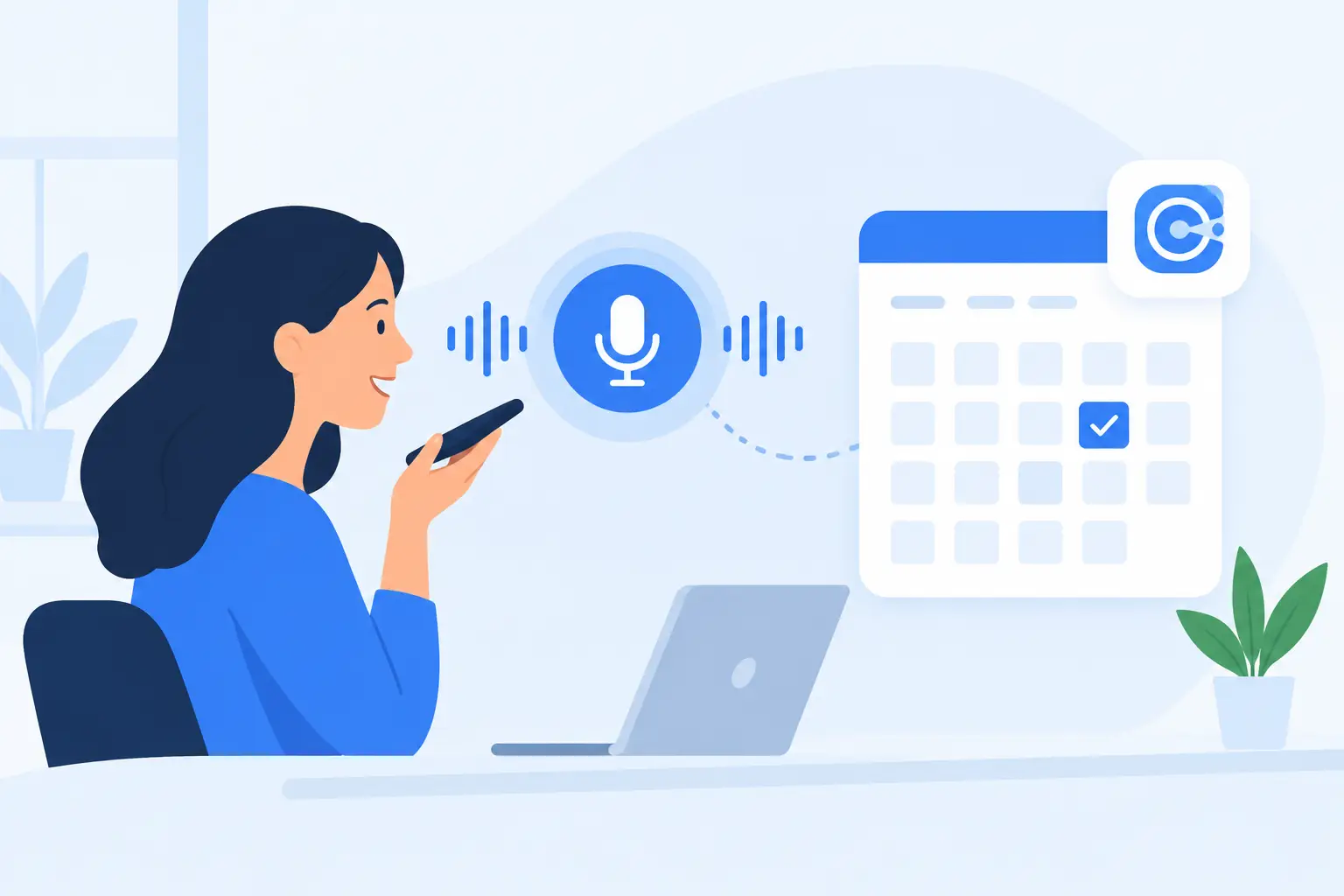
A caller is ready to book, but your front desk is helping someone in person. Thirty seconds becomes three minutes. The caller hangs up and books with the next provider. Voice AI integration with Calendly closes that gap by answering immediately, qualifying the caller, and placing the right appointment on the calendar while intent is still high.
For appointment-driven businesses, this is not a novelty feature. It is revenue protection. A voice agent can handle routine scheduling conversations around the clock, follow your booking rules, and route exceptions to a person before a promising lead turns into a missed opportunity.
What Voice AI Integration With Calendly Actually Does
Calendly handles available time slots and booking logic. Voice AI handles the conversation that gets a caller to the right slot. Together, they turn a phone call into a completed appointment without requiring a team member to manually check availability, repeat intake questions, or send scheduling links to people who would rather speak to someone.
A well-configured agent answers questions such as, “Do you have anything Thursday afternoon?” or “Can I book a consultation for my spouse?” It can identify the requested service, collect basic details, check the appropriate Calendly event type, offer available times, confirm the selection, and send the booking confirmation through your existing process.
The outcome is simple: calls are answered faster, calendar entries are more consistent, and your team spends less time on repetitive scheduling work.
This does not mean every call should be automated. Complex medical questions, sensitive legal matters, pricing disputes, or high-value enterprise deals often need a live person. The point is to automate the predictable part of the call while preserving a fast human handoff for everything else.
Why a Calendar Link Is Not Enough
A scheduling link works for people who are already comfortable completing the process on their own. Phone callers are different. They may be driving, comparing options, asking about a service, speaking another language, or calling after business hours. Telling them to check their email for a link adds friction at the exact moment they are asking for help.
A voice agent keeps the conversation moving. It can answer approved questions from your knowledge base, explain the next step, and book the appointment before the caller has time to reconsider. For a dental office, that may mean identifying whether the caller needs a cleaning, emergency visit, or new-patient exam. For a real estate team, it may mean qualifying location, budget, and move timeline before booking a showing consultation.
The calendar is still the source of truth. Voice AI simply makes it usable over the phone at the speed customers expect.
Build the Booking Flow Before You Build the Agent
The strongest deployments start with operations, not prompts. Before configuring an agent, define exactly what the business wants the caller to accomplish and what the agent is allowed to say.
Start with your appointment types. A salon may have separate booking rules for color consultations, haircut appointments, and extensions. A legal office may need distinct event types for intake calls, case reviews, and existing-client follow-ups. Each event type should have a clear duration, availability window, assigned team member or pool, and any required buffers.
Then map the questions that determine the correct booking path. Keep them short. Ask only for information that changes the appointment type, eligibility, routing, or follow-up. If every caller must provide insurance details before booking, that may belong in a post-booking form instead of a long phone conversation. The fewer unnecessary questions you ask, the higher your completion rate will be.
Finally, define the exception rules. If no suitable time is available, should the agent offer a waitlist? If a caller asks for same-day service, should it transfer to the front desk? If someone needs to reschedule, can the agent manage it directly or should it send the request to a coordinator? These decisions prevent an automated call flow from becoming a dead end.
Keep the Agent Grounded in Approved Information
Voice AI should not improvise policies, clinical guidance, legal advice, pricing, or availability. Give the agent a controlled knowledge base with the services you offer, approved answers, locations, business hours, preparation instructions, cancellation policy, and transfer rules.
For regulated industries, set firm boundaries. A healthcare practice can use an agent to schedule an appointment and collect non-sensitive intake information, but it should not diagnose symptoms. A law firm can qualify a lead and book a consultation, but it should not provide legal advice. Clear guardrails protect the customer experience and make the system easier for your team to trust.
The Call Flow That Converts More Callers
The best booking conversations sound direct, not scripted. The agent should identify the business, state that it can help schedule an appointment, and ask one focused question to determine intent. From there, it should guide the caller toward a choice instead of presenting a wall of options.
For example, an inbound HVAC call could begin by asking whether the caller needs repair, maintenance, or a new-system estimate. Once the answer is known, the agent can offer the correct Calendly event type and confirm the service area before showing times. If the caller says there is no heat or a possible gas issue, the flow should prioritize emergency instructions and human escalation rather than a standard calendar slot.
Outbound booking is equally valuable. After a web lead submits a form, a voice agent can call within seconds, answer basic questions, and schedule a consultation while the lead is still engaged. It can also follow up with no-shows, renewal customers, and prospects who opened an email but never booked. This is where speed matters most: a delayed callback turns a warm lead into a cold list.
Cloud One-Ai can support this model with inbound and outbound voice agents, 300+ workflow integrations, multilingual conversations, calendar connections, call recordings, and human transfers when the call requires more judgment.
What to Measure After Launch
Booking volume alone does not tell you whether the workflow is working. Track the full path from answered call to attended appointment. That reveals whether the problem is availability, agent instructions, lead quality, or what happens after the booking.
Monitor these operational metrics:
- Answer rate and average speed to answer, especially after hours
- Appointment conversion rate by call reason, location, and campaign
- Transfer rate and the reasons callers need human help
- No-show and cancellation rates for AI-booked appointments
- Call outcomes, recordings, and transcripts for quality review
A high transfer rate is not automatically a failure. It may indicate that your escalation rules are protecting the customer experience. But if callers repeatedly ask questions the agent cannot answer, expand the knowledge base or adjust the call flow. If many callers reject the offered times, revisit calendar capacity, event duration, and the number of options the agent presents.
Protect the Customer Experience
Tell callers when they are speaking with an automated assistant where required by law or company policy. Maintain consent and call-recording disclosures, honor communication preferences, and configure outbound campaigns around applicable calling rules. The exact requirements depend on your industry, location, call type, and how data is handled, so operational review should happen before launch.
Also give callers an obvious route to a person. A simple “Would you like me to connect you with the team?” can save a relationship that a rigid automation flow would lose. Automation should reduce wait time, not make customers fight to be heard.
Where This Works Best
Voice AI booking delivers the strongest return where phone volume is high, appointment types are defined, and delayed responses cost real revenue. Multi-location clinics can direct callers to the right office and provider. Dealerships can schedule test drives and service appointments. Home-service teams can qualify jobs by ZIP code and urgency. Restaurants can manage private-event inquiries. Agencies can deploy repeatable booking agents across client accounts without building a call operation from scratch.
It is less effective when every appointment requires deep judgment before a time can be offered. In those cases, use the agent for initial qualification and immediate human routing instead. Even that limited workflow can eliminate voicemail backlogs and reduce response time.
Start with one high-volume use case, such as new-patient calls or web-lead follow-up. Review real call recordings, tighten the questions, and expand only after the booking flow produces reliable outcomes. The goal is not to automate every conversation. It is to ensure that a caller ready to take the next step never has to wait for someone to answer the phone.