



A missed call at 10:15 a.m. can become a booked appointment with a competitor by 10:17. For clinics, legal offices, dealerships, home service teams, and multi-location operators, the phone is not a background channel. It is where prospects decide whether to buy, schedule, or move on. The decision between virtual agents versus answering services comes down to what happens next: a message gets captured, or the caller gets real progress.
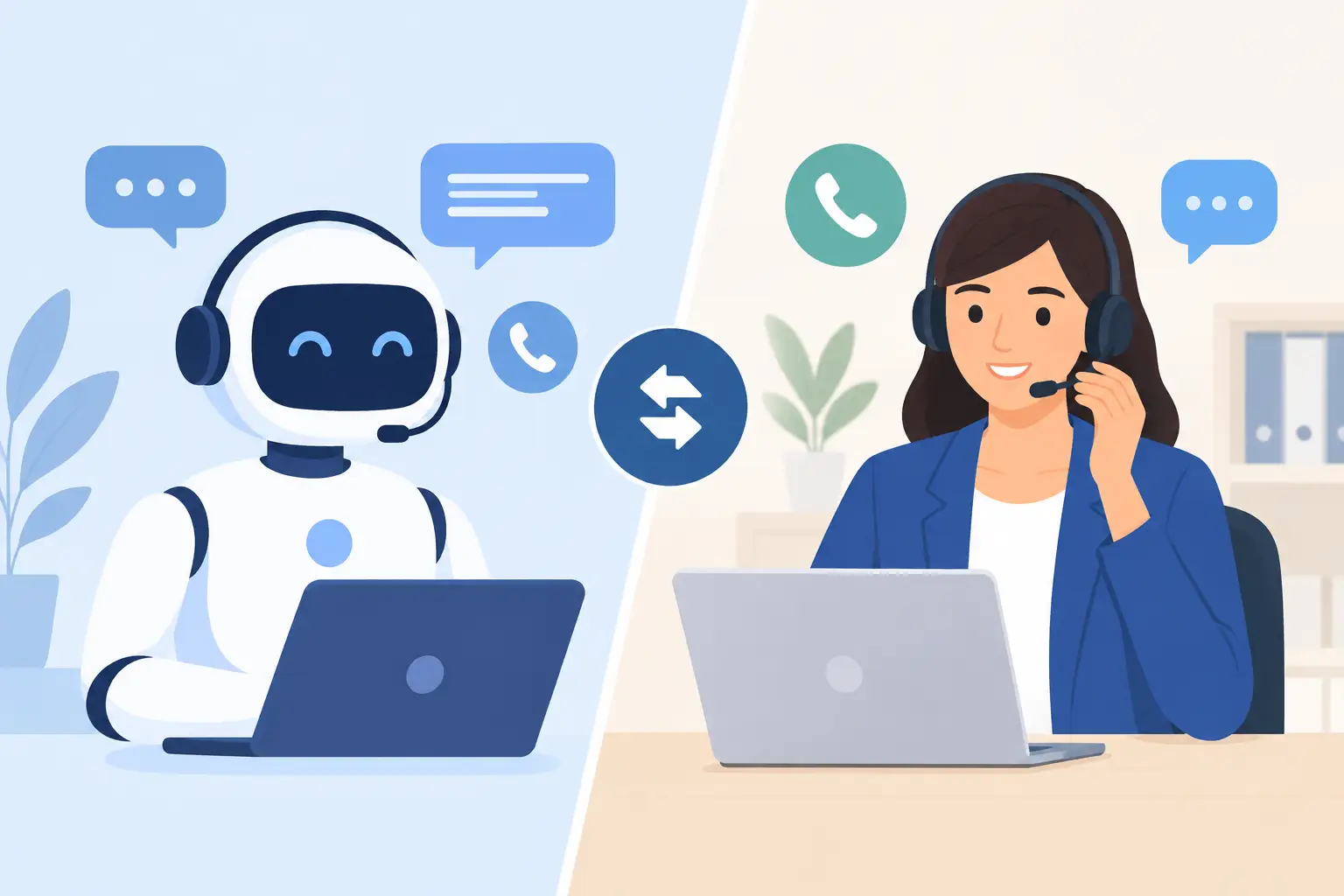
Both options can protect your business from missed calls. They do it in very different ways. An answering service adds trained people to your phone coverage. A virtual voice agent uses AI to answer, understand intent, follow approved workflows, update connected systems, and transfer the call when a person is needed. The right choice depends on your call volume, workflow complexity, service standards, and how quickly you need to respond.
Virtual Agents Versus Answering Services: The Core Difference
An answering service is a staffed operation that answers calls on your behalf. The representative typically follows a script, takes messages, handles basic routing, and may provide simple information such as office hours or directions. Higher-end services can schedule appointments or follow escalation instructions, but the workflow is still driven by agent availability, training, and manual data entry.
A virtual agent is software that handles live phone conversations using a natural AI voice. It can greet callers, answer questions from an approved knowledge base, collect details, qualify a lead, schedule a time, send follow-up actions into your CRM, and transfer exceptions to your team. It is built to execute a repeatable process, not simply take a message.
That distinction matters when the call requires action. If a caller says, “I need the earliest dental cleaning appointment this week,” an answering service may record the request for staff follow-up. A configured AI agent can check available calendar slots, offer options, book the appointment, confirm contact details, and log the interaction before the caller hangs up.
Where Answering Services Still Make Sense
Human answering services remain valuable in situations where calls are highly unpredictable, emotionally sensitive, or require broad personal judgment. A law firm receiving a complicated family crisis, a medical practice handling an unusual patient concern, or a luxury hospitality business serving VIP guests may want a live professional at the first point of contact.
They can also be a practical fit for very low call volume. If your business gets a handful of after-hours calls each month and those calls only need a message delivered, paying for a full voice automation workflow may not be the first priority.
The trade-off is consistency and speed. Human operators work from instructions, but they do not automatically know every schedule change, inventory update, promotion, or CRM detail unless the service has been trained and given access. Every exception can create another message, another queue, and another manual task for your team.
Staffed coverage also has capacity limits. Peak periods can mean holds or rushed interactions. Quality can vary by representative. Bilingual coverage may cost more or be limited by availability. For businesses with seasonal surges, campaign-driven inbound calls, or multiple locations, those variables can become expensive fast.
Where Virtual Agents Create More Leverage
Virtual agents are strongest when calls follow repeatable business rules. That covers more revenue-critical calls than most operators expect: new lead intake, appointment booking, confirmation calls, rescheduling, FAQs, order status, renewal reminders, payment follow-ups, outbound prospecting, and post-service check-ins.
A well-configured agent does not replace judgment where judgment is needed. It removes the repeatable work that delays judgment. Your staff should spend time helping the caller who has a complex question, not asking every caller for their name, preferred time, and basic service need.
For example, a salon can use an AI voice agent to answer after-hours booking requests, identify the requested service, check the correct provider’s availability, and reserve an appointment. A real estate team can have the agent qualify an inbound lead, capture budget and preferred area, then route qualified prospects to the right agent. A dealership can call back web leads within minutes, confirm vehicle interest, and schedule a test drive while the lead is still active.
The operational advantage grows when the phone system connects to the systems your team already uses. Calendar access turns availability questions into booked appointments. CRM integrations turn call details into usable lead records. Automated reporting turns thousands of conversations into visible outcomes: answered calls, booking rates, transfers, missed opportunities, and common customer questions.
Cloud One-Ai is designed for this type of calling operation, with inbound and outbound agents, multilingual conversations, connected workflows, call records, and human handoff when the interaction needs your team.
Compare the Cost Beyond the Monthly Fee
A monthly answering service quote can look straightforward until call overages, after-hours coverage, bilingual requests, appointment scheduling, and custom scripting enter the picture. The bigger cost is often downstream: staff time spent returning messages, manually entering notes, chasing unqualified leads, and repairing incomplete intake details.
Virtual agent pricing is usually tied to usage, features, and included minutes. That can make costs more predictable for high-volume operations, especially when one platform can handle multiple call types. But virtual agents require initial setup. You need clear call flows, accurate business information, integration access, and a defined escalation path. The technology can move fast, but it should not be deployed without operational guardrails.
Consider the cost of response time, not only the cost per call. If your current process takes two hours to call back a new lead, the cheaper option may be costing you appointments. If your staff spends every Monday returning voicemail from the weekend, automation may create capacity without adding headcount.
Customer Experience Depends on the Design
Customers do not care whether the first voice they hear is human or AI. They care whether the call is easy, accurate, and useful. A friendly human representative who cannot answer the question or make the appointment still creates friction. An AI agent with a confusing script or outdated information does the same.
The best virtual agent experiences are narrow, clear, and action-oriented. The agent should introduce itself appropriately, state what it can help with, ask one question at a time, confirm critical information, and offer a fast transfer when it reaches a limit. It should not pretend to be human, improvise policies, or force callers through a dead end.
That means knowledge base controls matter. Your agent should use approved FAQs, service details, locations, pricing guidance, and policies. It should recognize when a caller is upset, has a clinical or legal urgency, requests a manager, or asks a question outside its scope. Those are handoff moments, not automation failures.
For multilingual businesses, language coverage is another customer experience issue. If callers need support in Spanish, Vietnamese, Mandarin, or another language, the answer cannot be “call back later.” Voice AI can provide immediate multilingual first-line coverage, while your internal team receives structured notes and escalations in the right place.
A Practical Decision Framework
Choose an answering service when your primary need is occasional human message-taking, calls are nuanced and unpredictable, and you do not need deep workflow automation. It can be the right safety net for a small operation with limited phone activity.
Choose a virtual agent when calls are frequent, repetitive, and tied to a measurable next step. Booking appointments, qualifying leads, confirming appointments, routing service requests, and running outbound follow-ups are strong starting points. These workflows are easier to standardize, monitor, and improve over time.
A hybrid model is often the most effective option. Let a virtual agent handle the first response, common questions, data collection, and routine scheduling 24/7. Route urgent, sensitive, complex, or high-value conversations to your staff or a live service. This gives callers immediate help without asking automation to handle every scenario.
Before selecting either model, map your last 100 calls. Identify why people called, what information was collected, how long it took to respond, which calls became appointments or sales, and where staff had to intervene. You will quickly see which calls need a person and which calls need a faster process.
The best first deployment is not the biggest one. Start with the call type that costs the most missed revenue or staff time, set clear transfer rules, review recordings and outcomes weekly, and refine from there. Every call your business answers with useful action is one less opportunity handed to the next provider.