



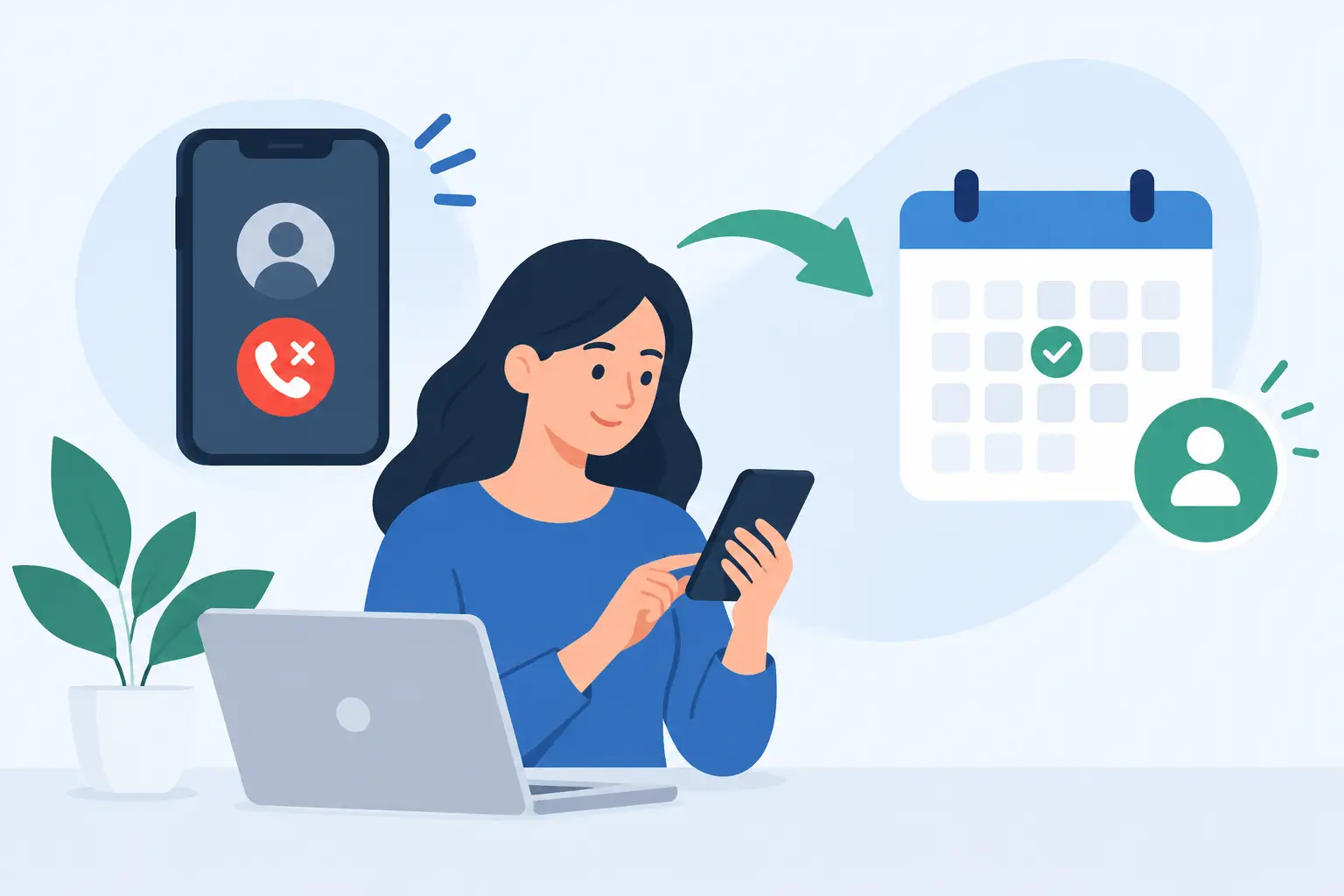
A missed call is rarely just a missed call. For a dental practice, it may be a patient ready to schedule treatment. For a dealership, it may be a buyer comparing inventory. For a legal office, it may be someone who calls the next firm within minutes.
Learning how to reduce missed calls means treating the phone as a revenue channel, not an interruption between tasks. The goal is not simply to answer more often. It is to give every caller a fast, useful next step, whether your team is available or not.
Why missed calls cost more than you think
Most businesses underestimate the impact because missed calls are scattered across busy periods, lunch breaks, after-hours windows, and staff handoffs. A receptionist may be helping someone in person. A sales rep may be on another call. A small office may have one person handling phones, scheduling, billing, and walk-ins.
The caller does not see those constraints. They only see a phone that rang with no answer, a long hold time, or a voicemail box that may never get a response. For high-intent calls, that gap creates immediate leakage in your pipeline.
The problem gets worse when follow-up is manual. If voicemail notes live in one inbox, leads live in a CRM, and appointments live in a separate calendar, calls can be delayed, duplicated, or forgotten. Reducing missed calls requires both coverage and a dependable process after the call comes in.
Start by finding where calls are being lost
Before adding technology or changing staffing, look at your call patterns for two weeks. The answer is usually more specific than “we need more people.” You may have excellent daytime coverage but lose calls after 5 p.m. Or your team may answer calls but abandon them during transfers or hold periods.
Track call volume by hour, answer rate, abandoned calls, average hold time, voicemail volume, callback time, and appointment outcomes. If possible, review recordings and transcripts. They show whether callers are hanging up because nobody answered, because the menu is confusing, or because staff cannot access the information they need.
Look for these operational gaps:
- Calls that arrive outside regular business hours
- Multiple calls coming in at the same time
- Calls routed to staff who are already busy
- Leads waiting too long for a callback
- Language barriers that prevent callers from booking
- Repetitive questions consuming your front desk
This baseline matters. A restaurant handling ten missed reservation calls on Friday night needs a different solution than a real estate team losing leads while agents are in showings.
How to reduce missed calls with better call coverage
The fastest improvement is to define what happens every time a call arrives. Do not leave this to chance or to whichever employee happens to be free.
Set clear routing rules
Route calls based on intent, location, department, and business hours. A caller asking about an appointment should reach scheduling. A caller needing account support should not sit in a sales queue. Multi-location businesses should direct callers to the right office without requiring them to navigate a long phone tree.
Use a sensible fallback path when the first person does not answer. For example, ring the primary staff member briefly, then send the call to a shared queue, an available teammate, or a trained answering solution. Avoid routing a caller through five extensions. More routing steps create more hang-ups.
For urgent businesses, such as healthcare practices and legal offices, build an escalation path for time-sensitive requests. Not every call needs a live specialist, but the calls that do should move quickly.
Cover peak periods, not just office hours
Many teams staff around a standard schedule while customer demand follows a different one. Patients call before work. Home service leads call after discovering a problem at night. Restaurant guests call during the busiest service window, when nobody can safely step away.
Extend coverage around your actual call data. That could mean staggered shifts, a dedicated peak-hour queue, or 24/7 automated answering that captures details and schedules qualified callers. The right model depends on call complexity. Simple requests such as hours, availability, pricing ranges, appointment booking, and lead intake are often ideal for automation. Sensitive, complex, or exception-based conversations should move to a human with context.
Let callers self-serve without making them work for it
Self-service only reduces missed calls if it is faster than speaking with someone. Keep prompts short and natural. Offer clear options, but do not force every caller through a rigid menu when they could simply explain why they are calling.
A capable voice agent can answer common questions from an approved knowledge base, check availability, book on connected calendars, send confirmations, and transfer callers when needed. This gives customers a response right away while protecting staff time for the conversations that need judgment.
Make every answered call count
Answer rate is only one metric. A call that gets answered but ends with “someone will call you back” can still become a lost opportunity.
Give your team a consistent intake process. Capture the caller’s name, number, reason for calling, preferred time, location, and urgency. For sales and service businesses, record the source, service requested, budget range when appropriate, and next action. Then push that information into the CRM or scheduling platform automatically.
Speed matters most after the first interaction. If a caller cannot book immediately, send a confirmation text or email and assign a specific follow-up owner. A vague callback task is easy to miss. A scheduled task with a due time, call notes, and the caller’s context is far more likely to be completed.
For appointment-based businesses, the best outcome is usually booking during the first call. Connect your phone workflow to Calendly, Cal.com, Google Calendar, Apple Calendar, or your existing scheduling system. Removing the gap between conversation and booking reduces no-shows and prevents staff from chasing prospects later.
Use AI for repeatable calls, not every call
Voice AI is most valuable when it removes predictable bottlenecks. It can answer every incoming call at once, handle routine questions, qualify leads, book appointments, run follow-ups, and collect details before a human joins the conversation.
That does not mean replacing your team with an impersonal script. The better approach is to give AI a defined role and a controlled handoff. Set the knowledge it can use, the questions it should ask, the actions it can take, and the cases that require a person.
Cloud One-Ai can support this model with AI voice agents that handle inbound calls, work across languages, connect to business systems, and transfer callers to a live team member when the conversation requires it. With parallel call handling, businesses do not have to choose which caller gets answered during a rush.
The trade-off is configuration. An agent should not be deployed with vague instructions or outdated information. Review its scripts, test common scenarios, define prohibited responses, and monitor recordings. A well-configured agent protects your brand. A poorly configured one creates a new version of the problem.
Build a missed-call recovery process
Even strong coverage will not prevent every missed call. The difference is what happens next.
Create a recovery workflow that triggers immediately when a call is abandoned, unanswered, or sent to voicemail. For many businesses, a text sent within one or two minutes is more effective than waiting for a staff member to review the call log. Keep it direct: acknowledge the missed call, offer a callback or booking option, and make it easy to respond.
Then prioritize callbacks by intent. A new patient inquiry, a hot sales lead, or an urgent service request should not sit behind a routine question. Call transcripts and intake details help your team make that decision quickly.
Measure recovery separately from answer rate. Track how many missed callers you reconnect with, how fast your team responds, and how many of those conversations turn into appointments, quotes, or sales. This reveals whether your issue is coverage, follow-up, or conversion.
Treat call reporting as an operating tool
Call data should guide staffing, scripts, and automation. Review it weekly, not only when complaints appear.
Watch for recurring questions that could be automated, departments with high transfer rates, locations with weaker answer rates, and periods when callers abandon before speaking to anyone. If callers repeatedly ask about the same policy, availability, or service, the issue may be unclear website information or an outdated call flow, not staffing.
Also review quality. Fast answers only help if callers receive accurate information and a useful next step. Use recordings and transcripts to coach staff, improve agent prompts, and identify friction in the booking process.
A phone line should never be a dead end. Put the right coverage, routing, automation, and recovery process in place, then let your call data show you where the next booked opportunity is slipping away.