



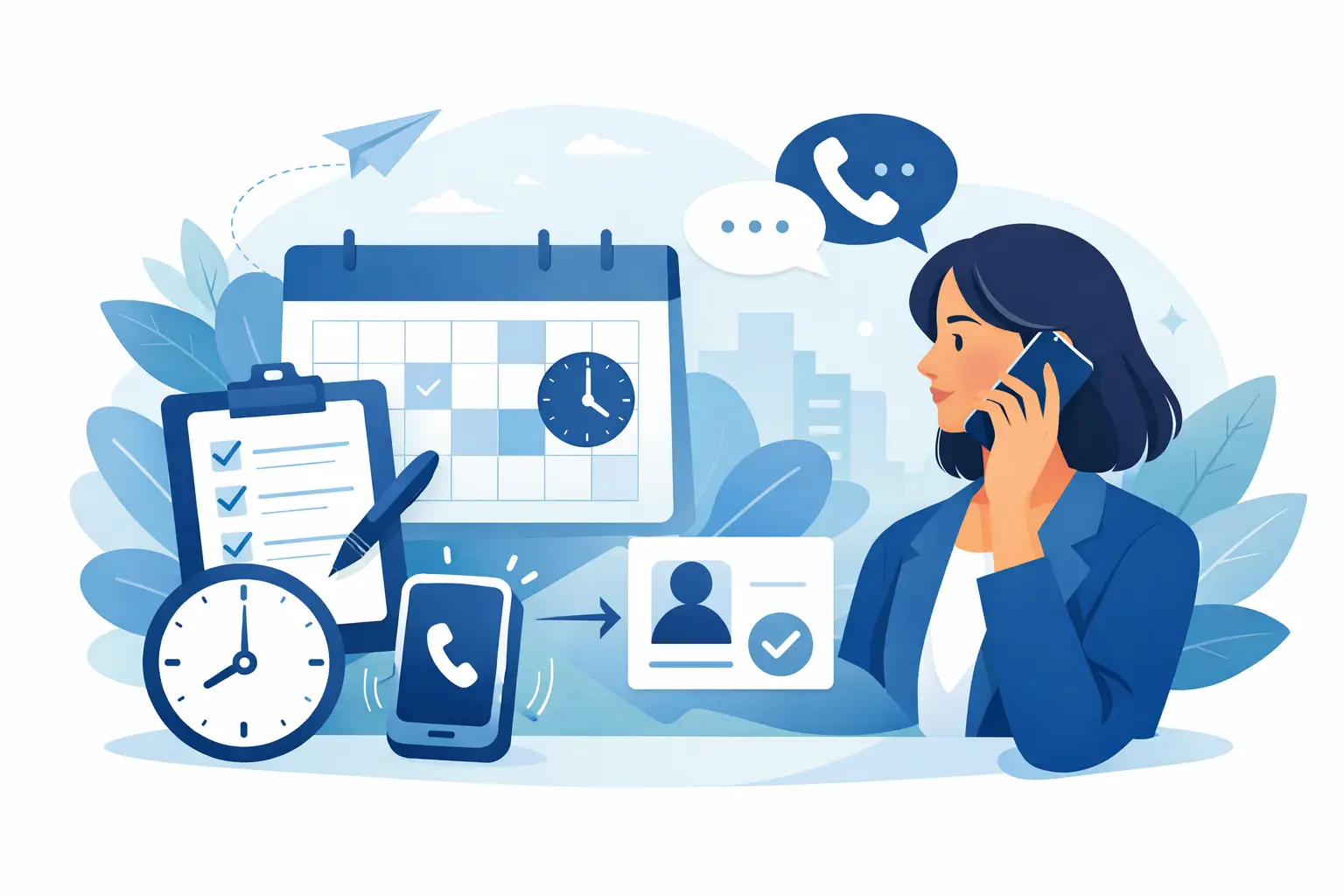
If your front desk misses three calls before lunch, that is not a staffing issue alone. It is a revenue leak. For service businesses, clinics, dealerships, and sales teams, learning how to book appointments by phone is really about speed, consistency, and what happens in the first 30 seconds of the call.
A phone appointment is won or lost fast. The caller wants a clear answer, a time that works, and confidence that showing up will be worth it. If they hit voicemail, wait on hold, or get bounced between people, many will simply call the next business. That is why the best phone booking process is not just polite. It is operational.
How to book appointments by phone without losing callers
The biggest mistake businesses make is treating appointment booking like a simple calendar task. It is a conversion event. The person answering the phone needs to do three things well: respond quickly, guide the conversation, and secure a confirmed next step.
That starts with call handling speed. A good process means calls are answered immediately or routed with zero confusion. It also means the person or system taking the call has access to the right information, including service details, availability, location rules, and qualification criteria. Without that, the call gets longer, the customer gets less certain, and the booking rate drops.
There is also a trade-off between flexibility and control. If agents improvise too much, you get uneven customer experience and bad data. If the script is too rigid, callers feel handled instead of helped. The best phone booking flow gives structure while leaving room for natural conversation.
Start with a script that sounds human
A strong script does not sound scripted. It creates momentum.
The opening should identify the business, ask how to help, and move quickly toward the appointment goal. For example, if someone calls a dental office asking about a cleaning, the next step is not a long explanation of services. It is qualifying the need, confirming whether they are a new or existing patient, and offering times.
What works best is a short conversational sequence. First, understand the reason for the appointment. Second, gather only the information needed to book or qualify. Third, offer a specific time window instead of a vague question like, “When would you like to come in?” Specific options move callers toward a decision.
This is where many teams slow down. They ask too many questions up front, especially if they are trying to be thorough. But over-collecting information before securing the appointment creates friction. In most cases, you want to book first, then capture secondary details through intake forms, follow-up text, or confirmation workflows.
The call flow that converts better
When businesses ask how to book appointments by phone more effectively, the answer is usually not a new script alone. It is a tighter call flow.
A high-performing call flow usually follows this order: greeting, reason for call, qualification, appointment offer, confirmation, and reminder setup. That sequence keeps the call moving and reduces drop-off.
Qualification matters, but only if it supports the booking outcome. A legal office may need to screen for case type. A med spa may need to confirm service eligibility. A sales team may need to check budget or location. But not every call needs the same level of filtering. If your qualification process blocks too many bookings, your team may protect calendars while starving the pipeline.
The better approach is tiered qualification. Book straightforward calls immediately. Route edge cases to staff review or a human transfer. This keeps the easy wins from getting stuck behind process.
Timing also matters. If the caller is ready now, offering an appointment next week may cost you the lead. Businesses that book well by phone usually keep some near-term availability visible and prioritize speed-to-slot. A fast appointment often beats a perfect schedule.
Why missed calls hurt more than most teams realize
A missed call is not just one missed opportunity. It often creates a chain of losses. The caller may contact a competitor, your team may waste time returning cold leads, and your no-show risk increases when the booking happens too late.
This is especially true for multi-location businesses and high-call environments. One receptionist can only handle one conversation at a time. Call spikes do not care about shift schedules. Lunch breaks, after-hours calls, and Monday morning volume all create gaps.
That is why many operations teams move from manual phone booking to a hybrid or automated model. Not because people are unimportant, but because phone demand is uneven and revenue cannot wait in a queue.
An AI voice agent can answer instantly, book from a connected calendar, qualify leads, and pass complex cases to staff when needed. Used well, it does not replace good operations. It enforces them. For businesses handling large call volumes or multiple locations, that means fewer missed bookings and more predictable performance.
Build the booking workflow behind the call
The phone conversation is only one part of the system. The real gains show up when the call is connected to your calendar, CRM, and follow-up stack.
If appointments are booked by phone but not logged cleanly, your team ends up fixing data by hand. If reminders are not triggered automatically, show rates suffer. If lead source and call outcomes are not tracked, you cannot tell which campaigns are producing real appointments.
A better setup connects the booking action directly to downstream systems. The moment an appointment is scheduled, the customer should receive a confirmation. The CRM should update. The calendar should block correctly. If the business requires prep instructions, those should go out automatically.
This is where operations-first teams pull ahead. They do not just ask whether calls are being answered. They ask whether every answered call becomes usable data and a measurable next step.
Handle objections without dragging out the call
Some callers hesitate because of price, timing, insurance, distance, or uncertainty about what happens next. The goal is not to win a long debate. It is to reduce friction and move them toward a low-risk commitment.
That means giving enough information to create confidence without overwhelming the caller. If someone asks about pricing, be clear. If the exact answer depends on the service, give a range or explain the process briefly, then return to scheduling. If someone is unsure, offer the earliest consultation or evaluation slot available.
What you should avoid is turning the phone into a full discovery session unless your business model truly requires it. Long calls reduce throughput and often do not improve close rates. Shorter, well-structured calls typically perform better because they protect momentum.
Train for consistency, then measure what matters
Phone booking gets better when it is coached like a sales and service function, not treated as admin work. That means reviewing recordings, checking transcripts, and looking at where calls break down.
Start with practical metrics: answer rate, booking rate, average time to book, transfer rate, after-hours capture, and show rate. If your booking rate is low but answer rate is high, the problem is likely script, qualification, or scheduling flexibility. If answer rate is low, staffing or automation is the issue first.
Reporting also helps you spot a common blind spot: top performers often book more not because they talk more, but because they ask for the appointment sooner. Teams that wait too long to offer a slot lose control of the call.
For businesses scaling across locations, standardization matters even more. Every location should follow the same booking logic, service rules, and escalation paths. Otherwise, one office converts well while another wastes the same lead flow.
When automation makes the most sense
Not every business needs full automation on day one. Some only need after-hours coverage. Others need overflow handling during peak periods. High-volume teams may want outbound follow-ups, reactivation calls, or multilingual booking support.
The right level depends on call volume, appointment value, complexity, and staffing constraints. A salon may need quick inbound scheduling and reminders. A healthcare group may need stricter qualification, compliance controls, and human handoff. A dealership may care more about lead response speed and test-drive scheduling.
The advantage of a platform approach is control. With a system like Cloud One-Ai, businesses can deploy phone agents quickly, connect calendars and CRMs, manage inbound and outbound workflows, and keep human transfers available when the call needs judgment. That matters because the best automation strategy is rarely all or nothing. It is targeted, measurable, and built around missed-call recovery and conversion lift.
The real goal is not booking more calls
It is booking more of the right appointments with less delay and less manual effort.
When your phone process is tight, callers get answers fast, staff spend less time on repetitive scheduling, and leadership gets cleaner visibility into what is driving revenue. That is the shift. Phone booking stops being a front-desk burden and starts acting like infrastructure.
If you want better results, tighten the script, reduce steps, connect your systems, and remove wait time wherever you can. The businesses that win by phone are usually not saying something magical. They are simply faster, clearer, and always available when the customer is ready to book.