



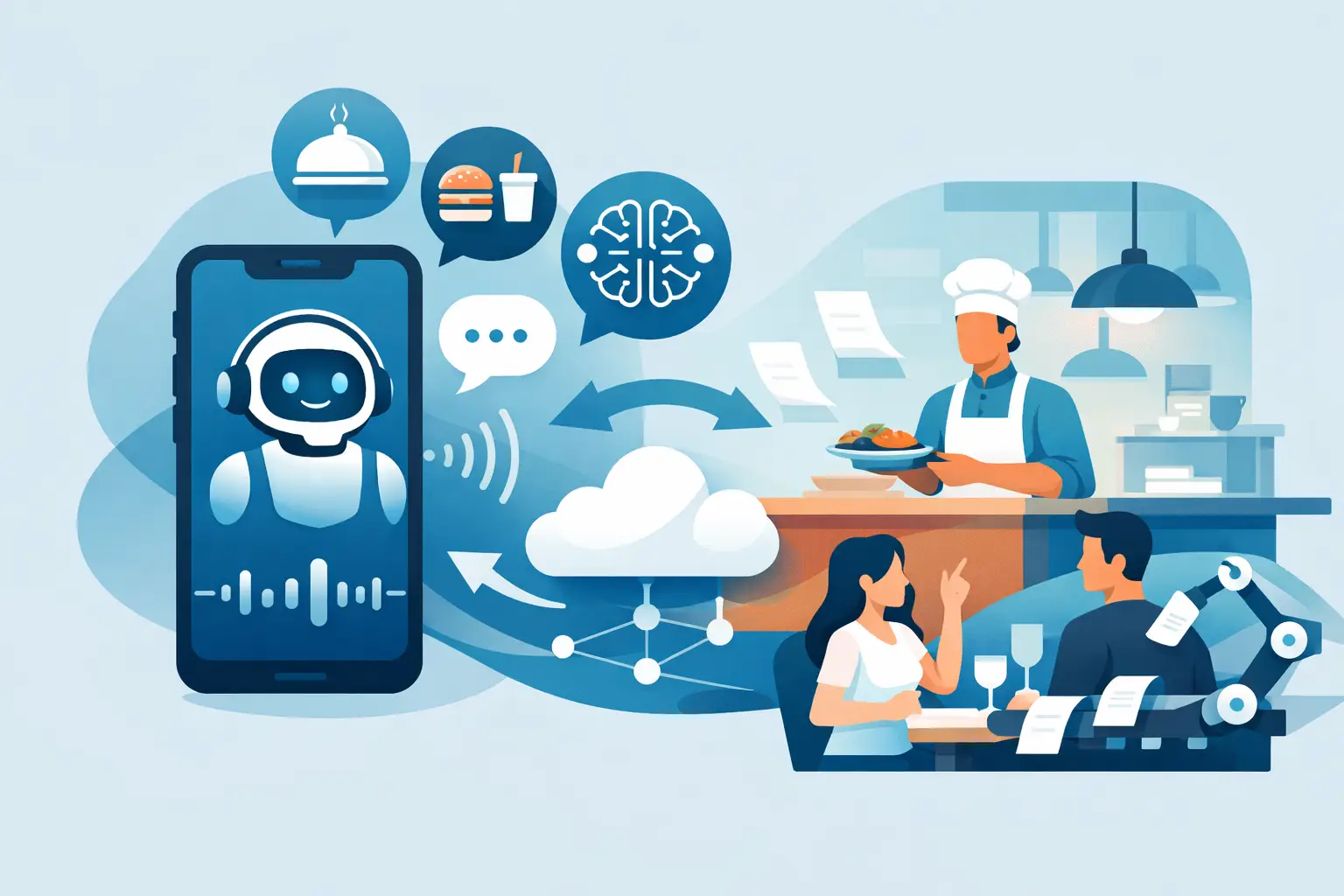
Friday at 6:45 p.m., the kitchen is buried, the front counter has a line, delivery apps are firing nonstop, and the phone keeps ringing. That is where AI phone ordering for restaurants stops being a nice idea and starts looking like straight operational relief. If calls drive takeout, catering, reservations, or repeat business, every missed ring is lost revenue and a customer who may not call back.
For most operators, the problem is not demand. It is call handling capacity. A host can greet guests or answer the phone. A cashier can bag orders or repeat the specials to a caller. During rush periods, something gives. Usually, it is the phone. AI changes that by giving restaurants an always-on voice layer that can answer instantly, take orders, answer common questions, and route edge cases to a person when needed.
Where AI phone ordering for restaurants actually helps
The clearest win is simple: more calls answered. If your restaurant misses calls during lunch, dinner, or late-night peaks, the gap is measurable. Calls that go unanswered do not just affect that single order. They train customers to use a third-party app, switch to a competitor, or stop calling altogether.
An AI phone ordering system can pick up every call, even when your team is maxed out. It can handle menu questions, collect order details, confirm pickup times, and pass the order into your operating workflow. That matters for independent stores and multi-location groups alike. The value is not theoretical. It shows up in shorter hold times, fewer abandoned calls, and better labor allocation on the floor.
There is also a consistency advantage. Human staff vary by shift, experience, and stress level. AI follows the script you approve. It can ask the same upsell question every time, repeat the order back clearly, verify allergy notes, and give the correct store hours without guessing. For operators trying to standardize service across locations, that control matters.
The operational case for AI phone ordering for restaurants
Restaurants do not need more software for the sake of software. They need fewer interruptions, cleaner handoffs, and less dependence on whoever happens to be near the phone. That is why the strongest case for AI is operational, not futuristic.
A good system should plug into the tools your team already uses. If phone orders still end up on sticky notes or get shouted to the line, you have not solved much. The right setup connects calls to order workflows, CRMs, calendars, or internal systems so the conversation becomes usable data instead of one more task for staff to re-enter.
This is especially valuable for stores with multiple revenue paths. Maybe weekday lunch is mostly pickup, weekends bring heavy reservation traffic, and holidays drive catering inquiries. AI can sort those call types automatically. A caller asking for a private party menu should not sit behind ten callers asking whether you are open on Monday.
Parallel call handling is another practical advantage. A busy restaurant can get hit with clusters of calls at once, especially after a local event or during weather-driven delivery spikes. Human teams can only answer one line at a time. AI can handle many calls at once without callers hearing endless ringing or getting pushed to voicemail.
What a strong restaurant phone agent needs to do
Not every voice bot is built for restaurant volume. The difference is not whether it can talk. The difference is whether it can operate inside real service conditions.
First, it needs to understand menu complexity. Restaurants deal with modifiers, combos, substitutions, size options, add-ons, and item availability. If the system cannot handle, “I want two chicken bowls, one with no onions, add avocado, extra sauce on the side,” it will create more cleanup than value.
Second, it needs clear escalation rules. Some calls should transfer. Large catering orders, customer complaints, allergy concerns, and VIP situations often need human involvement. The goal is not to automate everything. The goal is to automate the repeatable majority and hand off the exceptions fast.
Third, it needs reporting. Operators should be able to review call recordings, transcripts, order outcomes, missed intents, and transfer rates. If you cannot see what the agent handled and where it struggled, you cannot improve it. This is where an operations-first platform stands apart from a novelty tool.
Fourth, it needs multilingual support if your market demands it. Many restaurants serve bilingual neighborhoods or tourist-heavy areas. If your callers are more comfortable ordering in Spanish or another language, that is not a fringe use case. It is revenue protection.
Common restaurant use cases beyond basic ordering
Phone ordering gets the headline, but restaurants often gain just as much from automating adjacent call types. Reservation requests are the obvious one. Instead of tying up front-of-house staff, AI can collect party size, date, time, and contact details, then confirm or route based on your rules.
Catering is another high-value category. These calls often happen during peak service, which is the worst time for staff to stop and quote trays, delivery windows, and minimums. AI can qualify the lead, collect event details, and push the inquiry into the right follow-up workflow.
Then there are the repetitive calls that consume time without generating much margin: hours, address, parking, wait times, dietary options, and holiday availability. Automating those frees staff to handle in-store guests and higher-value interactions.
For multi-location brands, call routing becomes even more useful. AI can identify which location the customer needs, answer location-specific questions, and route or process the order accordingly. That reduces cross-store confusion and protects brand consistency.
What to watch out for before you deploy
AI is not a permission slip to set it and forget it. Restaurants move fast. Menus change, specials rotate, prices update, and sold-out items happen in real time. If the knowledge behind the phone agent is stale, customers will feel it immediately.
That means your setup needs a clean process for updates. Menus, hours, holiday schedules, and promotional offers should be easy to change without opening an engineering project. Non-technical operators need control.
It also means you should define where automation stops. Some brands want the agent to fully capture and process standard pickup orders. Others prefer the agent to qualify and summarize, then hand off to staff for final confirmation. Both can work. It depends on menu complexity, order volume, and how much integration depth you have behind the scenes.
Voice quality matters too. If the agent sounds slow, awkward, or easily confused by background noise, customers will bail out. Restaurant calls are not calm office calls. People call from cars, sidewalks, and crowded homes. The experience has to be fast and clear.
How to evaluate ROI without guessing
Start with the basics. How many calls go unanswered each week? What is the average ticket for phone orders? How many calls are simple FAQs that pull staff off the floor? Once you know those numbers, the model becomes straightforward.
If AI helps you answer more calls and recover just a fraction of missed orders, the revenue impact can show up quickly. Add labor savings from fewer repetitive interruptions, and the case gets stronger. For groups with several locations, those gains compound fast.
But ROI should not be measured only in labor. It also shows up in customer experience. Shorter waits. Fewer dropped calls. Better after-hours coverage. More consistent upsells. Cleaner reporting on what callers actually want. These gains are harder to see at first, but they affect retention and repeat order volume.
An enterprise-ready platform should make these numbers visible. You want call data, transcripts, outcomes, and trend reporting tied to the workflows your team already tracks. If your phone channel is still a blind spot, you are making staffing and service decisions with incomplete information.
Why the best setups feel boring
The strongest AI phone ordering systems are not the ones that sound flashy. They are the ones your staff stops thinking about because the calls are getting answered, the handoffs are clean, and the rush feels less chaotic.
That is the real benchmark. Not whether the technology is impressive on a demo. Whether it helps your restaurant keep pace when demand spikes, labor is tight, and callers expect instant service.
For operators who need speed, this category is moving in the right direction. Platforms such as Cloud One-Ai are pushing voice automation beyond single-use bots into a practical calling infrastructure – with always-on coverage, multilingual support, workflow integrations, reporting, and human handoff built in. That matters because restaurants do not need a science project. They need something they can deploy quickly, control easily, and trust during the dinner rush.
If your phones are still a bottleneck, the next step is not to ask whether AI is coming. It is to decide how much revenue you are still willing to leave ringing.