



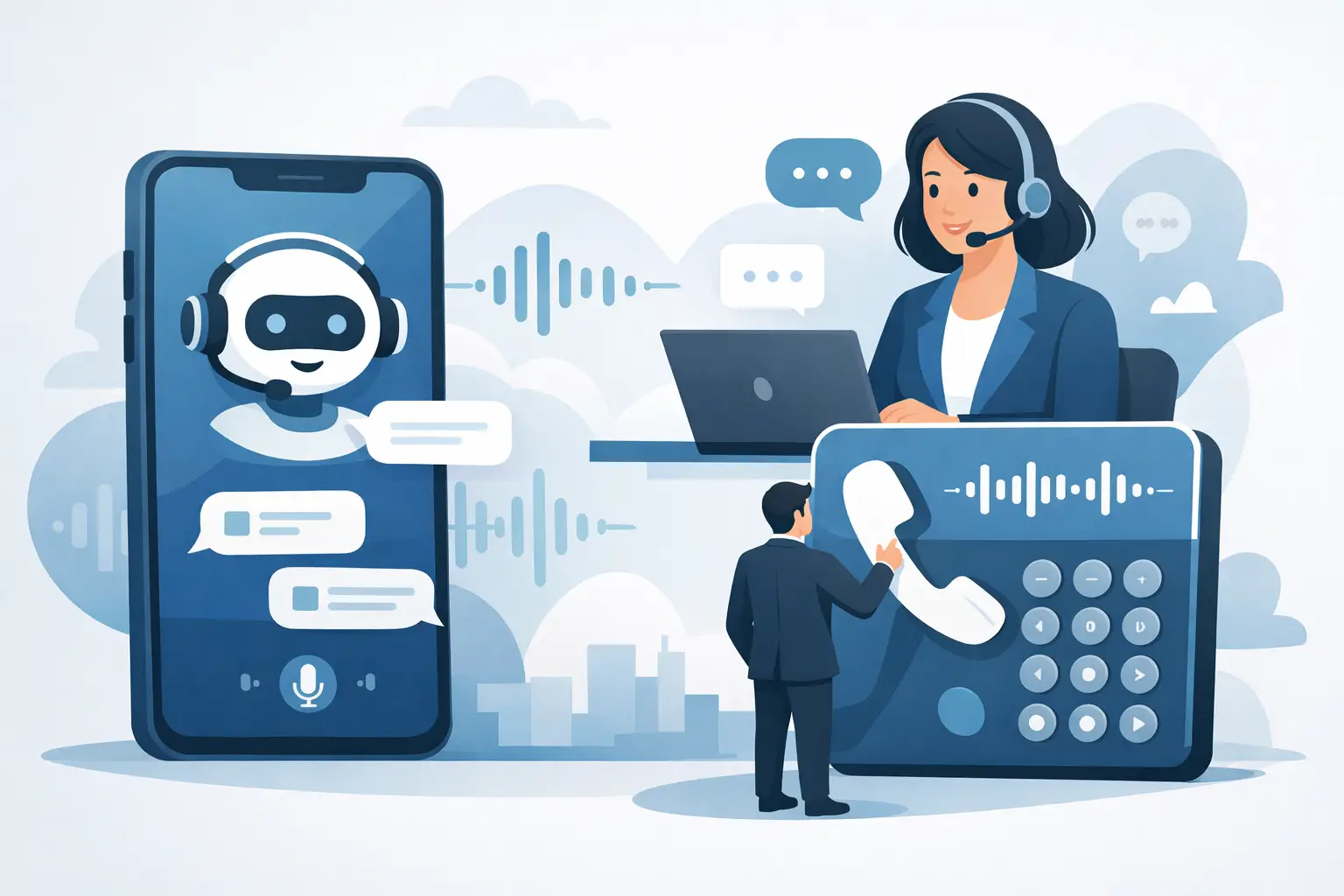
If your front desk misses five calls before lunch, or your sales team lets inbound leads sit for 20 minutes, the problem is not awareness. It is capacity. A conversational AI phone systems review should start there – not with hype, but with the daily cost of unanswered calls, slow follow-up, and repetitive conversations that drain staff time.
For most businesses, the question is no longer whether AI can answer a phone. It can. The real question is whether it can do the work you actually need done: book appointments correctly, qualify leads without sounding robotic, transfer edge cases fast, and log every call into the systems your team already uses. That is the standard that matters.
What a conversational AI phone systems review should actually measure
A lot of reviews get distracted by surface-level demos. A voice sounds natural for 30 seconds, and suddenly the platform gets labeled as enterprise-ready. That is not enough. In production, phone AI has to handle interruptions, bad audio, different accents, messy customer intent, and callers who do not answer questions in the order you expected.
The first thing to evaluate is task completion. Can the system finish the call objective without creating more cleanup work for your team? If you run a dental office, that means booking the right slot, confirming insurance or patient type when needed, and sending the result into your calendar or CRM. If you run a dealership or legal intake flow, it means collecting the right qualification details and routing the lead correctly.
The second metric is containment with control. Full automation sounds attractive until the bot starts guessing. Good systems know when to stay in flow and when to hand off to a person. That balance matters more than a perfect synthetic voice.
Third is operational visibility. If you cannot review transcripts, listen to recordings, track outcomes, and see where calls fail, you are managing blind. AI calling is not a set-it-and-forget-it tool. It needs reporting tight enough to improve scripts, monitor compliance, and catch failure points early.
The core categories that separate strong platforms from weak ones
Voice quality is only the starting point
Yes, the agent should sound human. But realistic speech without reliable turn-taking is a problem. If the system talks over callers, misses interruptions, or loses context after one unexpected response, the experience falls apart fast.
What you want is conversational control. The platform should manage pauses well, handle corrections naturally, and keep the call moving toward an outcome. In busy service businesses, callers often speak casually or skip context. The AI needs to recover without sounding confused.
Integrations decide whether the system saves time or creates admin work
This is where many tools look strong in demos and weak in reality. If your phone AI can book an appointment but cannot sync with your calendar, CRM, or scheduling stack, you still have a manual process. That is not automation. That is extra monitoring.
For SMBs and multi-location operators, integrations are usually the difference between ROI and frustration. HubSpot, GoHighLevel, Zoho, Google Calendar, Apple Calendar, Calendly, and operational systems all matter because the phone call is only one step in the workflow. The best platforms connect the call to what happens next.
Scale matters more than many buyers expect
A single-location salon may care most about missed calls after hours. A call center, dealership group, or agency client may need dozens of calls handled at once. If the system slows down under load or requires awkward workarounds to manage peak volume, the economics break.
Parallel call handling is not just a technical detail. It affects whether your marketing campaigns, inbound spikes, and seasonal traffic can be absorbed without adding headcount. If your business runs on the phone, concurrency is part of customer experience.
Knowledge controls reduce risk
One of the biggest trade-offs in conversational AI is flexibility versus accuracy. A highly open-ended model may sound more natural, but it can also drift. Platforms with controlled knowledge sources, script logic, and bounded responses tend to perform better in regulated or detail-sensitive environments.
That matters for healthcare, legal intake, pricing questions, and any business where a wrong answer creates operational or compliance exposure. Good systems let you ingest documents, pull from approved website content, and constrain answers so the AI stays on-message.
Conversational AI phone systems review: where buyers get burned
Most disappointment comes from buying for the demo instead of the workflow.
A polished voice sample can hide weak implementation tools. If it takes days of technical setup to launch, or if every script change needs a developer, non-technical teams lose momentum. Operations leaders need systems they can adjust quickly. If a business changes office hours, intake criteria, or routing logic, the AI should be editable without filing tickets for every update.
Another common failure is weak handoff design. Plenty of platforms claim live transfer capability, but the experience can be clumsy. The caller repeats everything, the staff member lacks context, and the transfer feels like a reset instead of a continuation. Better systems pass the transcript, call summary, and relevant tags so the human picks up with context.
Pricing is another trap. Some vendors look inexpensive until minute costs, telephony fees, or integration limits start stacking up. Others include generous base plans but restrict critical functions behind enterprise gates. A serious review should look at the all-in cost of operating the phone channel, not just the monthly subscription headline.
What different buyers should prioritize
SMBs and service businesses
If you run a clinic, salon, restaurant, legal office, or real estate team, speed to deployment matters. You do not need a six-month implementation. You need something that can start answering calls, booking appointments, and reducing overflow fast.
In this segment, the best systems are usually the ones that balance easy setup with enough control to match your business rules. Look for no-code configuration, clear scheduling logic, multilingual support, and reporting your manager can actually use.
Sales teams and call centers
Outbound capability becomes more important here. Can the platform run follow-ups, renewals, reactivation campaigns, and lead qualification at volume? Can it trigger actions inside the CRM automatically? Can it handle retries, voicemail logic, and disposition tracking cleanly?
For revenue teams, the review should focus less on novelty and more on throughput. You want shorter response times, more touches per rep, and cleaner qualification before a human ever gets involved.
Agencies and resellers
This buyer has a different lens. The key question is not only whether the voice AI works, but whether it can be packaged and managed across clients. Subaccounts, rebilling, white-label dashboards, usage controls, and client-level reporting become core requirements.
A strong white-label setup lets agencies launch quickly without building telephony infrastructure from scratch. That changes the business model from service delivery only to recurring software revenue.
How to compare platforms without wasting a month
Start with one live use case, not ten. Pick the highest-friction call type in your business – missed inbound leads, appointment booking, after-hours support, or follow-up campaigns. Then score each platform on five areas: setup speed, task completion, integration depth, reporting, and human handoff.
Do not overvalue perfect natural language in test calls. A platform that sounds slightly less polished but books correctly, logs every outcome, and routes edge cases cleanly will outperform a flashier system in daily operations.
It also helps to ask how fast your team can deploy and iterate. In practice, a good platform should let you create an agent fast, test it quickly, and improve it with actual call data. Operational speed matters because phone workflows change constantly.
One platform in this category, Cloud One-Ai, reflects where the market is heading: less standalone voice demo, more full AI call center infrastructure. That means inbound and outbound support, multilingual voice, broad integrations, parallel call handling, reporting, and white-label expansion in one system. For many buyers, that all-in-one model is easier to operationalize than stitching together telephony, AI, and automation tools separately.
The real ROI is not just labor reduction
Labor savings matter, but they are only part of the picture. The bigger gains often come from response speed and consistency. A missed call at 8:10 a.m. or an unreturned lead at 6:40 p.m. is not just inefficiency. It is lost revenue.
When conversational AI works well, it extends coverage without adding queues, handles repetitive call types without burnout, and captures intent while the customer is still ready to act. That can raise show rates, improve close rates, and reduce the lag between inquiry and booking.
Still, it depends on fit. If your calls are highly complex, emotionally sensitive, or full of exception handling, AI should support the workflow rather than replace it end to end. The smartest deployments are usually selective. Automate the repeatable layer. Escalate the nuanced layer.
The best conversational AI phone system is not the one with the most impressive demo voice. It is the one that answers on time, completes the task, integrates with your stack, and gives your team control. If a platform can do that consistently, it stops being an experiment and starts acting like infrastructure.