



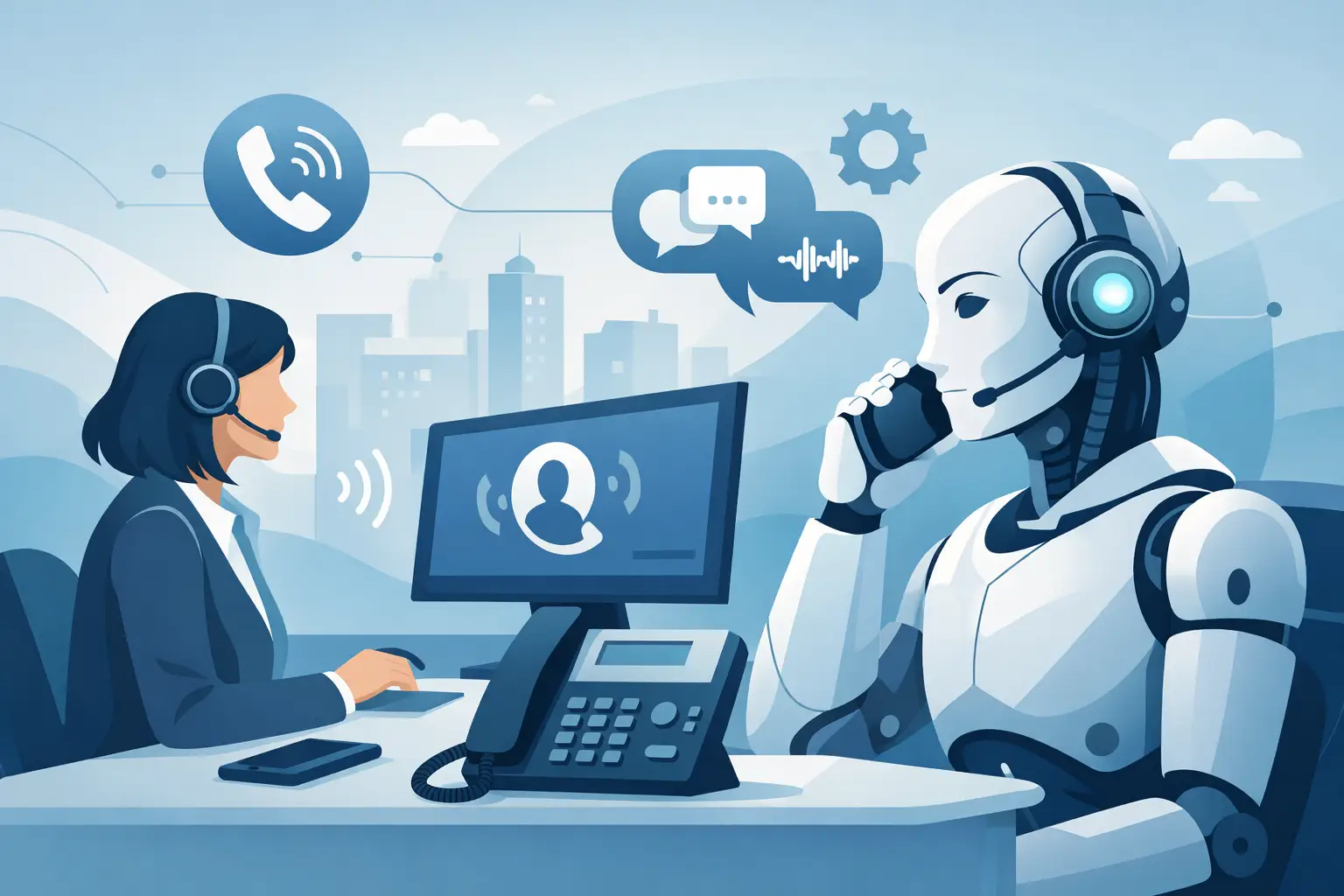
A missed call at 4:58 PM can cost more than the ad spend that drove it. For a dental office, that might be a canceled slot never refilled. For a law firm, it could be a high-value intake that calls the next number. For a restaurant, it is often a simple reservation request that turns into lost revenue. So, can ai answer business phone calls in a way that actually helps operations? Yes – but only when it does more than sound human.
The real question is not whether AI can pick up the phone. It can. The real question is whether it can complete the job behind the call: book the appointment, qualify the lead, answer the routine question, update the system, and transfer to a person when the moment calls for it.
Can AI answer business phone calls for real business use?
For practical business use, the answer is yes. Modern voice AI can answer inbound calls, carry on natural conversations, follow scripts, capture caller details, check calendars, confirm bookings, and trigger workflows in connected systems. It can also place outbound calls for follow-ups, reminders, renewals, lead qualification, and reactivation campaigns.
That said, not every AI phone system is ready for production. Some are little more than voice demos with weak call control, no reporting, and no connection to your actual operations. A business does not need a novelty. It needs a system that reduces missed calls, shortens response time, and helps staff focus on work that requires judgment.
That is where the gap is. AI answering a phone call is easy to market. AI handling business phone traffic reliably, at volume, across locations, with clean handoff and reporting, is a different standard.
What AI is actually good at on phone calls
The strongest use cases are repetitive, time-sensitive, and process-driven. Think appointment booking, FAQs, intake questions, order status, lead routing, after-hours support, and outbound follow-up. In these cases, consistency matters more than improvisation. An AI voice agent does not get tired, does not forget a step, and does not leave a call ringing because the front desk is helping someone in person.
This matters most for businesses where phone volume directly affects revenue. Healthcare practices, dental clinics, salons, real estate teams, dealerships, restaurants, and legal offices all live with the same pressure: answer fast, route correctly, and keep the schedule full. If your staff misses calls during lunch, after hours, or during peak periods, AI can close that gap immediately.
It also helps with scale. A human receptionist can only handle one conversation at a time. A voice AI platform built for operations can manage parallel calls, which changes the economics for busy teams and multi-location operators. When demand spikes, the system keeps answering.
Where AI still needs guardrails
AI is not the right fit for every call from start to finish. Sensitive billing disputes, emotionally charged complaints, complex legal questions, and situations requiring discretionary decision-making still benefit from human involvement. The best setup is not AI instead of people. It is AI for the predictable 80 percent, with fast transfer for the other 20 percent.
That handoff matters. If callers get trapped in a loop, confidence drops fast. If the system can recognize when a caller is frustrated, detect when a question falls outside its approved knowledge, and transfer with context, the experience stays intact. That is how AI supports service quality instead of damaging it.
There is also a governance issue. Businesses need control over what the AI can say, what information it pulls from, and what happens after each call. A voice agent should operate inside approved scripts, connected calendars, and defined workflows. It should not guess its way through regulated or high-risk conversations.
What to look for if you want AI to answer business phone calls
If you are evaluating whether AI can answer business phone calls for your company, look past the voice demo. Start with workflow depth.
Can the system book into your actual calendar? Can it sync with your CRM? Can it log call outcomes, trigger follow-up tasks, and send transcripts to the right team? Can it support inbound and outbound use cases in one platform, or are you stitching together separate tools?
Language coverage also matters more than many buyers expect. If you serve multilingual communities, the ability to handle calls in multiple languages and accents is not a nice extra. It is a conversion lever. The same is true for local and global number coverage if you operate across regions.
Then there is reporting. If you cannot see recordings, transcripts, conversion outcomes, missed opportunities, and call trends, you are managing blind. Operations teams need visibility. They need to know which scripts are working, where callers drop off, and which locations are underperforming on phone response.
Finally, look at deployment speed. Most businesses do not have months to build a custom voice stack. They need something they can configure quickly, test against real scenarios, and roll out without hiring a telecom engineer.
The business case is not labor savings alone
A lot of companies approach this topic by asking whether AI can replace reception staff. That framing is too narrow and usually leads to the wrong rollout.
The bigger opportunity is revenue capture and service continuity. If AI answers every call, books after hours, follows up on missed leads, confirms appointments, and reduces no-shows, the return shows up in more than payroll. It appears in higher show rates, faster lead response, fewer abandoned calls, and better use of your existing staff.
For sales teams and call centers, the same logic applies on the outbound side. AI can qualify leads, run follow-up sequences, reactivate old contacts, and escalate hot prospects to closers. The value is not simply making calls cheaper. It is increasing throughput while keeping humans focused on deals and exceptions.
Can AI answer business phone calls better than voicemail?
In most cases, absolutely. Voicemail is passive. It asks the customer to do extra work and trust that someone will call back. Many never leave a message, and many businesses call back too late.
AI changes that by turning the missed call moment into a live interaction. Instead of hearing a greeting and hanging up, the caller can ask a question, request a booking, confirm hours, or get routed immediately. That keeps momentum on the call when intent is highest.
There is a clear difference here between basic auto attendants and modern voice AI. Press-1 phone trees create friction. Conversational AI reduces it when designed well. The caller says what they need, the system acts on it, and the business captures the opportunity in real time.
How deployment should work in a real operation
The best launches start small and specific. Pick one high-volume workflow first: new patient calls, reservation requests, after-hours intake, service scheduling, or lead qualification. Define the script, connect the calendar or CRM, set transfer rules, and review outcomes daily in the first phase.
From there, expand based on call data. If the agent handles booking well but struggles with policy questions, tighten the knowledgebase. If callers ask for humans too often, adjust the opening and transfer logic. If one location gets stronger results than another, compare call patterns and staff processes.
This is where a platform approach matters. A business should be able to ingest knowledge from its website or documents, configure no-code workflows, connect operating systems, and monitor performance from one place. That is how you move from trial to infrastructure.
Cloud One-Ai is built around that operating model – inbound and outbound calling, 300+ integrations, multilingual coverage, reporting, and human handoff in one AI call center setup. For businesses that want to deploy fast and prove ROI quickly, that all-in-one approach is often the difference between a pilot that stalls and a system that sticks.
The honest answer
Yes, AI can answer business phone calls. It can do it at a level that improves speed, coverage, and conversion. But the result depends on what you buy and how you implement it.
If you expect AI to wing every conversation with no rules, no integrations, and no escape hatch to a human, it will disappoint you. If you use it as an always-on operational layer for repetitive calls, structured workflows, and high-volume demand, it can become one of the most useful systems in your front office.
The smartest next step is not to ask whether AI sounds human enough. Ask whether it can handle the calls that already cost your business time, bookings, and revenue every single week.