



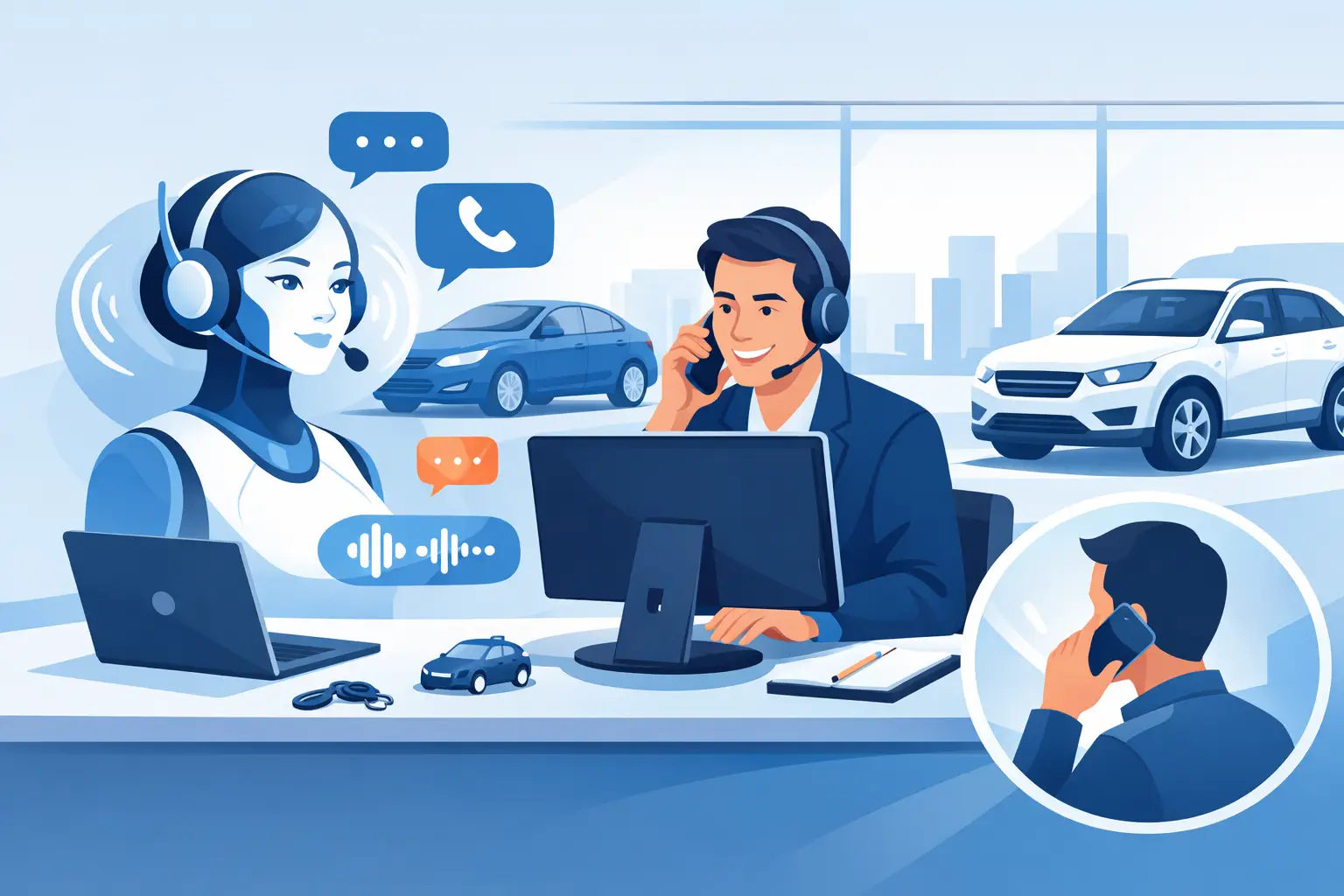
A missed sales call at 8:12 p.m. does not feel like a technology problem. It feels like a lost test drive, a dropped trade-in lead, or a service customer who books with another store before your team opens the next morning.
That is why an ai calling assistant for car dealerships is getting attention from dealers who care less about hype and more about call coverage, appointment volume, and faster follow-up. The phone still drives revenue in automotive. Internet leads matter, but calls close. When those calls go unanswered, sit in hold queues, or land with a team member who is already juggling showroom traffic, the cost shows up fast.
What an ai calling assistant for car dealerships actually does
At a practical level, this software answers inbound calls, places outbound calls, and handles the repetitive parts of dealership communication that slow teams down. That includes scheduling service appointments, confirming test drives, answering common inventory questions, following up on missed opportunities, and routing callers to the right person when the conversation needs a human.
The best systems do more than play a menu tree. They hold a natural conversation, pull from approved dealership information, log outcomes, and hand the call off with context. For a dealership, that means the assistant can answer after-hours calls, manage overflow during busy periods, and keep working when the BDC or front desk is maxed out.
This matters because dealerships do not have one call type. Sales, service, finance, parts, recalls, status checks, and vendor calls all hit the same phone lines. A useful AI calling layer has to separate what can be automated from what should be escalated.
Where dealerships lose money on the phone
Most stores do not have a lead problem. They have a response-time problem.
A shopper calls after seeing a vehicle online and wants to confirm availability. A service customer needs the next opening before a road trip. A prior lead finally calls back after three follow-up texts. In each case, speed matters more than a polished script. If nobody answers, the customer keeps moving.
Even well-run dealerships struggle here. Peak call windows collide with showroom activity. Service advisors are tied up. Reception gets overloaded. Sales teams are inconsistent with follow-up. The result is familiar: missed calls, abandoned calls, voicemails with no action, and appointments that never get confirmed.
An AI calling assistant does not replace the people who close deals. It protects their time by handling the calls that do not require a desk manager, senior advisor, or salesperson in the first 30 seconds.
Best use cases for dealerships
The strongest use case is service scheduling. Service departments live on volume, timing, and capacity management. An AI voice agent can answer basic maintenance inquiries, offer available appointment times, collect vehicle details, and book directly into a calendar or dealer workflow. That reduces hold times and frees advisors to focus on higher-value interactions at the lane.
Sales follow-up is another high-impact area. New leads often cool off because stores respond too slowly or too inconsistently. An AI assistant can call leads immediately, confirm intent, ask qualifying questions, and push hot prospects into a live handoff or booked appointment. If the lead is not ready, it can trigger a follow-up path instead of letting the opportunity disappear.
It also works well for appointment confirmations and no-show reduction. A lot of dealership leakage happens between booked and arrived. Automated voice reminders, reschedule flows, and quick confirmations help tighten that gap.
After-hours coverage is the simplest win. Most dealerships are not staffed around the clock, but buyer intent does not follow store hours. A system that answers every call, every night, every weekend, will usually pay for itself faster than a dealer expects.
What good deployment looks like
A dealership should not need a six-month project to make phone automation useful. Fast deployment matters because call handling problems are immediate. The right setup starts with a few narrow workflows, not a giant attempt to automate everything at once.
Begin with one or two high-volume call categories, usually service booking and after-hours sales inquiries. Define what the assistant is allowed to answer, what data it can collect, and when it must transfer. Then connect it to the systems that matter most, such as the CRM, appointment calendars, and reporting tools.
This is where infrastructure quality matters. If the assistant can only answer but not update systems, staff still end up cleaning up the work manually. If it cannot transfer cleanly or log call outcomes, the process breaks trust. And if reporting is weak, management has no way to track appointment rates, lead qualification, or missed handoff opportunities.
For dealerships with multiple rooftops, consistency matters even more. Different hours, brands, service rules, and promotions can create a mess unless the assistant is controlled centrally and localized where needed.
What to look for in an AI calling platform
Dealership buyers should be strict here. Not every voice tool is built for revenue operations.
First, look for inbound and outbound support in one system. A dealership does not need another point solution. It needs one calling layer that can answer incoming calls, run follow-up campaigns, and keep reporting in one place.
Second, look for real integration depth. If it connects with your CRM, calendars, and operational systems, the assistant becomes useful. If it only records calls and sends notifications, it creates extra admin work.
Third, make sure it can handle volume. Busy stores and dealer groups get hit with call spikes. Parallel call handling matters, especially for service and ad-driven campaigns.
Fourth, ask how the assistant is trained. Can it ingest your website, FAQs, service policies, and approved scripts? Can you control what it says? Automotive calls involve pricing, availability, financing language, and service expectations. Guardrails matter.
Finally, confirm human handoff. Some calls should stay automated. Others need to move instantly to a live person. That transfer should feel clean, with context passed along so the customer does not have to repeat everything.
A platform like Cloud One-Ai fits this model because it combines voice agents, telephony, integrations, reporting, and human transfer in one operational stack instead of forcing teams to stitch tools together.
Trade-offs dealerships should think through
There is no point pretending AI should answer every call forever. It should answer the right calls well.
High-emotion service recovery calls, detailed payment objections, complex finance questions, and negotiations around a specific vehicle are usually better with trained staff. The value of the assistant is not that it replaces those interactions. It gets the customer to the right person faster while keeping routine work off your team’s plate.
There is also a brand question. Some dealerships want the voice agent to be very transparent that it is AI. Others prefer a simpler assistant identity focused on speed and helpfulness. Either approach can work, but it should match your store’s customer experience standards and compliance posture.
And yes, bad implementation creates bad outcomes. If the script is vague, the knowledge base is outdated, or transfers are poorly designed, customers will feel it immediately. This is not plug-it-in-and-hope software. It needs clear call flows, approval rules, and active reporting.
How to measure if it is working
Dealership leaders should track performance at the same level they track leads and appointments.
Start with missed call reduction, answer rate, booking rate, and speed to first contact. Then watch show rate, transfer success, and lead qualification outcomes. For service, track booked appointments and advisor time saved. For sales, look at contact rate and set rate from inbound and outbound call workflows.
Call recordings and transcripts matter too. They show where callers drop off, what questions keep repeating, and where human handoff should happen sooner. This is where AI becomes an operations tool, not a novelty. You can improve scripts, tighten routing, and build better follow-up based on real conversations.
Why this is becoming standard dealership infrastructure
Dealerships already invest heavily in lead sources, ad spend, CRM tools, and showroom staffing. But if the phone layer is weak, all of that spend leaks.
An ai calling assistant for car dealerships closes that gap by making call handling always on, always consistent, and easier to measure. It helps stores answer more calls, set more appointments, and stop asking expensive staff to handle repetitive traffic all day.
That does not mean every store should automate the same way. A single-point rooftop with a lean team may start with after-hours and overflow. A larger group may automate service booking, BDC follow-up, multilingual support, and multi-location routing from day one. The right plan depends on call volume, staffing pressure, and how disciplined the store is with process.
The bigger point is simple. If the phone is still one of the fastest paths to a sale or service appointment, then it deserves the same level of automation, reporting, and uptime as the rest of your revenue stack.
The dealerships that move first will not win because they sound more futuristic. They will win because they answer faster, follow up more consistently, and give customers fewer chances to call the next store.